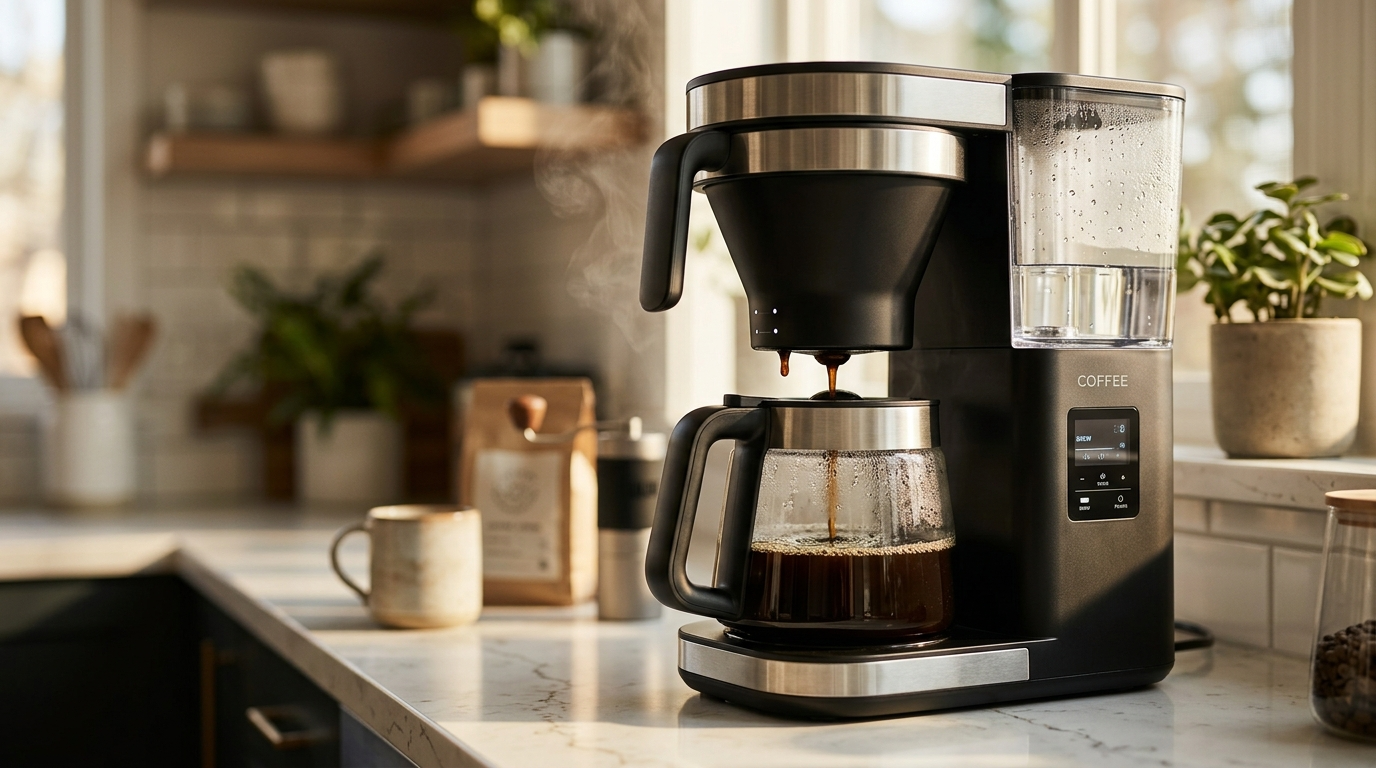
AeroPress vs moka pot isn’t a contest between good and bad coffee—it’s a choice between speed, control, and a richer, more intense brew. Compare the AeroPress brewing process with moka pot technique, learn how AeroPress coffee makers and aeropress filters shape your cup, and find the right fit for your routine.
AeroPress, Moka Pot: The Key Differences
Choosing between an AeroPress and a Moka Pot depends on how each brewer works and how much hands-on effort you prefer. I’d compare them across six criteria: flavor profile, brew strength, ease of use, brew time, cleanup, and cost.
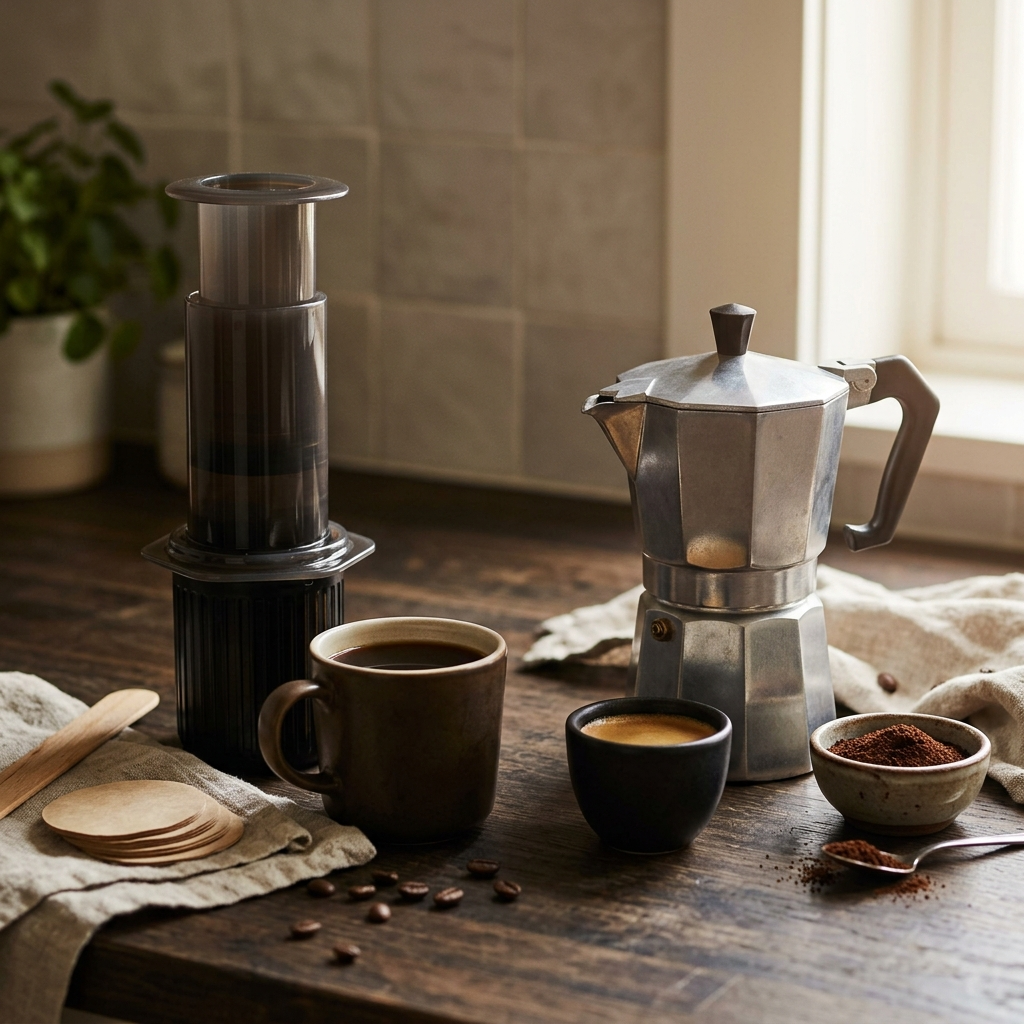
The AeroPress steeps coffee in water, then uses hand-applied air pressure to push it through a filter. Its paper micro-filter or optional metal filter, medium-to-fine grind, and compact brewing chamber give you flexibility in how you brew.
A Moka Pot uses heat from the stove to create pressure, which pushes water up through a basket of finely ground coffee. Its metal filter produces a concentrated brew, and the pot’s size determines how much coffee you can make.
The brewing mechanism is the key difference: you press the AeroPress by hand, while a stovetop heats the Moka Pot and drives water through the coffee. That distinction shapes the hands-on process for each brewer.
The basic mechanisms established, the comparison below shows how those differences translate into practical trade-offs.
Quick Comparison: AeroPress, Moka Pot
Compare the AeroPress and moka pot across six criteria to assess how each method may shape your cup and routine. Flavor, brew strength, ease of use, brew time, cleanup, and cost give you a practical basis for choosing.
| Criterion | AeroPress | Moka Pot |
|---|---|---|
| flavor profile | Rich but clean | Heavy and concentrated |
| brew strength | Adjustable through brewing and dilution | Concentrated |
| ease of use | Manual pressing; no stovetop needed | Stovetop brewing; monitor while heating |
| brew time | 1–2 minutes | 5–10 minutes |
| cleanup | Paper micro-filter or metal filter; top-rack dishwasher safe | Metal filter; hand wash only |
| cost | £39.99; £8.99 per 350 filters | From about £25; no paper-filter cost |
Treat these figures as a starting point, not a universal ranking: grind, technique, and serving style affect your results. I recommend weighing the criteria that matter most to you, then considering the AeroPress brewing process and filter choices alongside the moka pot’s stovetop routine.
AeroPress, Moka Pot, Compared Directly
Flavor Profile
The AeroPress makes rich, clean coffee, while the moka pot produces a heavier, more concentrated brew. The difference lies in cup character, not quality.
The AeroPress combines immersion brewing with air pressure, and its paper micro-filter or optional metal filter gives you a choice of filtration. Your filter also affects the resulting flavor, so the same brewing method can produce different cup profiles.
Choose the AeroPress when you want a richer, cleaner cup, because its filter options let you adjust filtration. The moka pot produces a denser, more forceful brew, giving you a distinct alternative.
I’d compare these methods by the cup you prefer, since personal taste—not a universal quality measure—determines which suits you better. Neither profile is inherently superior.
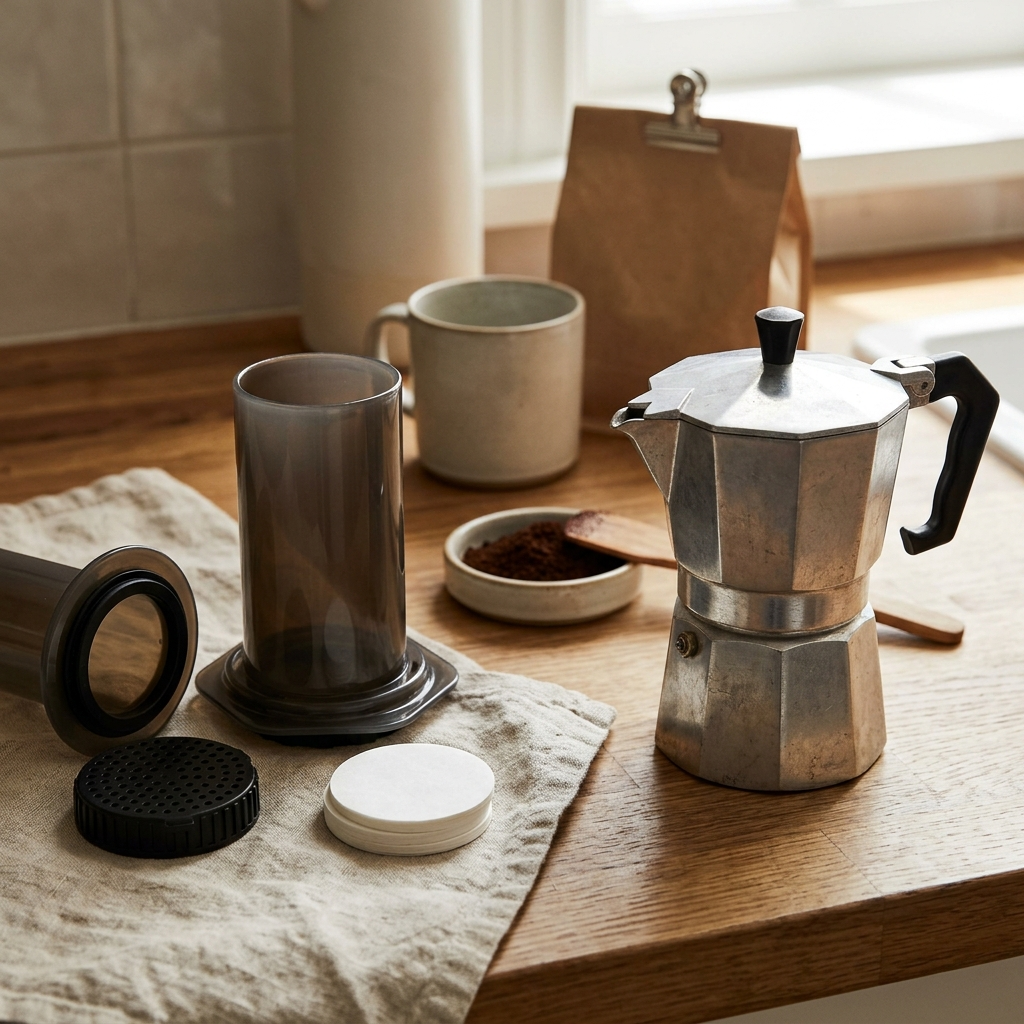
The AeroPress’s flavor varies with your filter, while the moka pot uses a metal basket and plate. These components distinguish each method’s brewing setup and help explain their different cup profiles.
Brew Strength
A moka pot produces a heavy, concentrated brew, while AeroPress coffee tastes rich but cleaner and lighter in the cup. When you compare them, consider both coffee concentration and how the brew feels as you drink it.
AeroPress filters also shape the cup: paper micro-filters and optional metal filters affect clarity. Your filter choice can change how intense the coffee seems, even when you compare the same measure of strength.
I use “strength” to describe brewing style, not caffeine content; a cup’s strength doesn’t indicate its caffeine level. Your impression of intensity alone, therefore, won’t tell you how much caffeine the cup contains.
Despite its intensity, moka pot coffee isn’t equivalent to espresso. When you compare brewing methods, keep that distinction in mind: a concentrated cup doesn’t make the two interchangeable.
Ease of Use
A moka pot requires attention on the stovetop, so you need to monitor its heat and brewing process. This makes the routine more hands-on while it brews.
The AeroPress stays on the counter, but you still add coffee and water, fit a filter, and press the brew through. Its contained process means you don’t need to monitor a heated pot.
With a moka pot, you fill the base and basket, assemble it, then monitor the heat and brewing process. The routine may feel simpler if you’re already comfortable brewing on the stovetop.
The AeroPress is more straightforward to manage, though pressing still takes coordination. I’d consider how comfortable you are with each process when choosing between them.
Filter choice and familiarity also shape your experience, so the simpler option may depend on what you already know.
Brew Time
A moka pot typically takes 5–10 minutes to brew, including heating, though your exact timing depends on your brewing conditions. Use that range as a practical estimate, not a fixed duration.
An AeroPress takes about 1–2 minutes from setup to pressed cup, so it is faster by these typical brewing-time estimates. If speed matters most to you, the AeroPress is the shorter option for your setup.
The difference partly reflects how each brewer works: the AeroPress uses a brief immersion and hand press, while a moka pot heats on the stovetop before coffee flows. Choose the AeroPress when speed is your priority, because its typical brew time is shorter.
Treat these times as comparisons, not guarantees; grind, heat source, and batch size can affect timing, especially with a moka pot. I’d compare your own results with these ranges rather than expect every brew to match them.
Cleanup
The moka pot’s metal basket and plate eliminate disposable filters, but you’ll need to hand-wash both parts. The pot isn’t dishwasher safe, so wash it by hand.
AeroPress cleanup is simpler: discard the paper micro-filter and compressed coffee puck together, then wash your brewer on the dishwasher’s top rack. A reusable metal filter avoids paper waste, but you’ll still need to rinse it.
I find the AeroPress easier to clean, especially with paper filters. Follow the top-rack guidance for your AeroPress, and hand-wash your moka pot.
Cost
A moka pot has a lower upfront cost: entry-level models start at about £25, while an AeroPress costs £39.99. It also requires no paper filters, which can reduce ongoing expenses when you compare the two options.
AeroPress paper micro-filters cost £8.99 per 350, though you can use a metal filter instead. Your running cost depends on your filter choice; I’d compare the upfront price with your preferred filter before deciding.
Verdict: the moka pot costs less to buy and needs no ongoing paper-filter spend; the AeroPress’s running cost depends on your filter choice. Check moka pot sizes against your brewing needs, since capacity varies by model. The listed prices also don’t account for differences in size or features.
These comparisons provide a basis for matching each brewer to the priorities that matter most in daily use.
The Conditional Verdict
The best choice depends on which trade-offs matter in your daily brewing. The AeroPress makes a rich, clean cup, while the moka pot produces a heavier, more concentrated brew. These are distinct coffee styles, not simply stronger and weaker versions of the same cup.
Buy it if: You want fast, consistent single-serve coffee with multiple brew strength options. Skip it if: You prefer manual brewing methods or need espresso-quality drinks.
Understanding AeroPress
Brewing Process
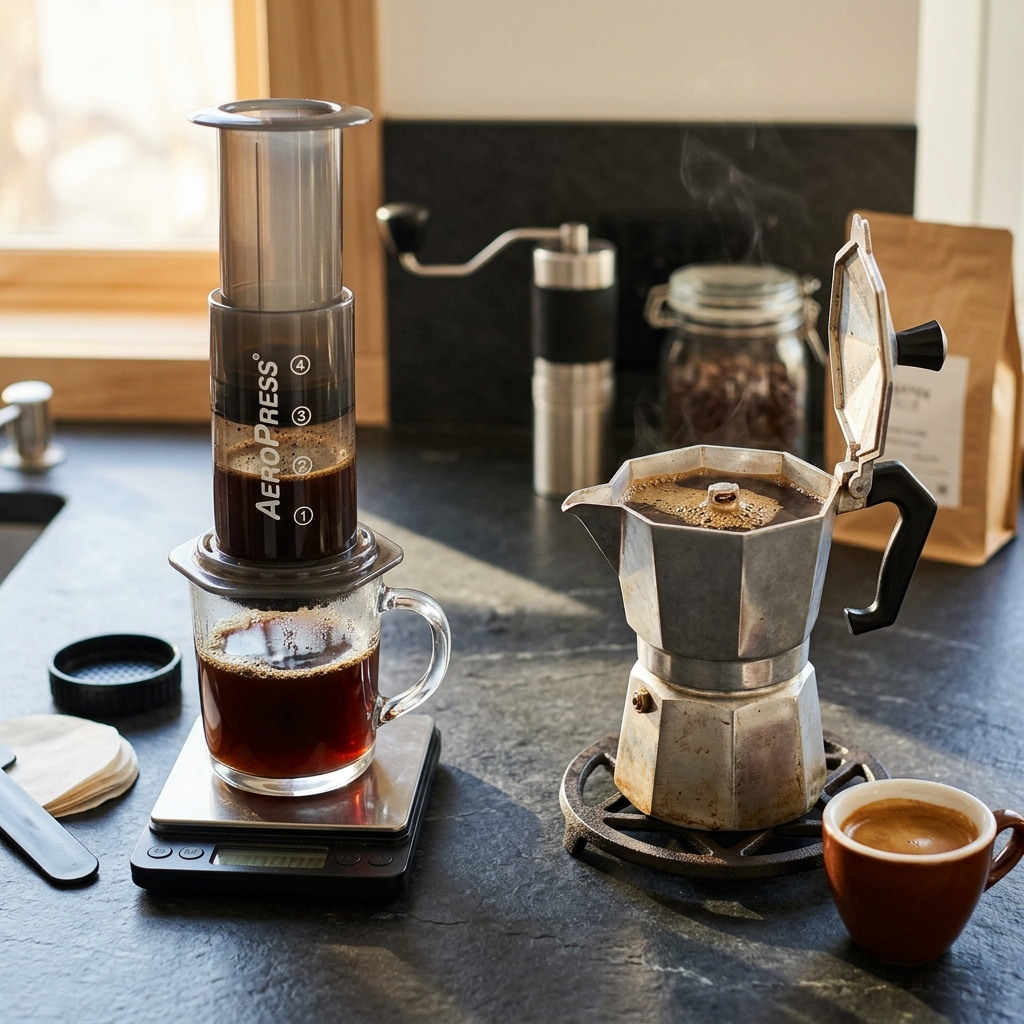
The AeroPress uses immersion brewing and a manual press, not a stovetop cycle. Add ground coffee and hot water to the chamber, let them steep, then press the plunger through a filter. A typical brew takes 1–2 minutes, though grind size and technique also affect your results.
Filters and Cleanup
You can choose paper micro-filters or a reusable metal filter. Paper produces a cleaner cup, while metal lets more oils through, giving the coffee a different texture. Your choice also affects cleanup: discard the used paper with the grounds, or rinse the metal filter after brewing.
The brewer is top-rack dishwasher safe. You can adjust your recipe to change brew strength, then dilute the concentrate after pressing if you prefer. I’d adjust the recipe first, because that lets you control strength before deciding whether to dilute.
Capacity and Cost
With a capacity of about 300 ml, the AeroPress suits one to two cups rather than a large batch. You don’t need to monitor a stovetop, but you control steeping time and pressure, so ease of use depends on your comfort with those steps.
The brewer costs £39.99, and 350 paper filters cost £8.99; a metal filter avoids that recurring purchase.
Having seen how the AeroPress handles brewing, filters, and capacity, consider the moka pot’s contrasting stovetop routine.
Moka Pot in Practice
As with the AeroPress, the steps involved affect how a moka pot fits your routine. Add water to the lower chamber and coffee to the metal basket, then assemble the pot and heat it on the stovetop. Pressure pushes hot water through the grounds into the upper chamber; remove the pot from the heat when brewing finishes.
Flavor and Grind
The result is heavy and concentrated, unlike the AeroPress’s richer, cleaner cup. A moka pot makes an intense brew, but it does not produce espresso. I recommend a grind finer than most filter coffee but coarser than espresso, so water can pass through the basket under pressure.
Timing, Cleanup, and Cost
You’ll need to tend the stovetop and monitor the brew rather than control a hand press. Brewing takes about 5 to 10 minutes, including heating. The metal basket and plate mean you won’t discard paper filters, but you’ll need to hand-wash the pot because it isn’t dishwasher-safe.
Entry-level pots start at about £25, with no recurring paper-filter expense. Capacity varies by model, from one to 18 cups; the practical choice is a size that suits the amount you want to brew. A moka pot is often called a stovetop espresso maker, but the name describes its pressure-brewing approach, not an espresso-equivalent result.
Frequently Asked Questions
What is the criticism of aeroPress?
A potential drawback noted in the comparison is that AeroPress coffee makers use disposable paper filters, which add an ongoing cost. A metal filter is an alternative.
Is an aeroPress just a French press? The AeroPress uses immersion and air pressure, while a French press uses a plunger and a metal mesh filter. Q: Does aeroPress give you microplastics?
The fact sheet and comparison do not provide information about microplastics, so they cannot establish whether an AeroPress releases them.
Is it possible to make espresso with an aeroPress?
The AeroPress can make rich, concentrated coffee, but the provided comparison does not establish that it produces espresso. Its brewing process uses immersion and air pressure.