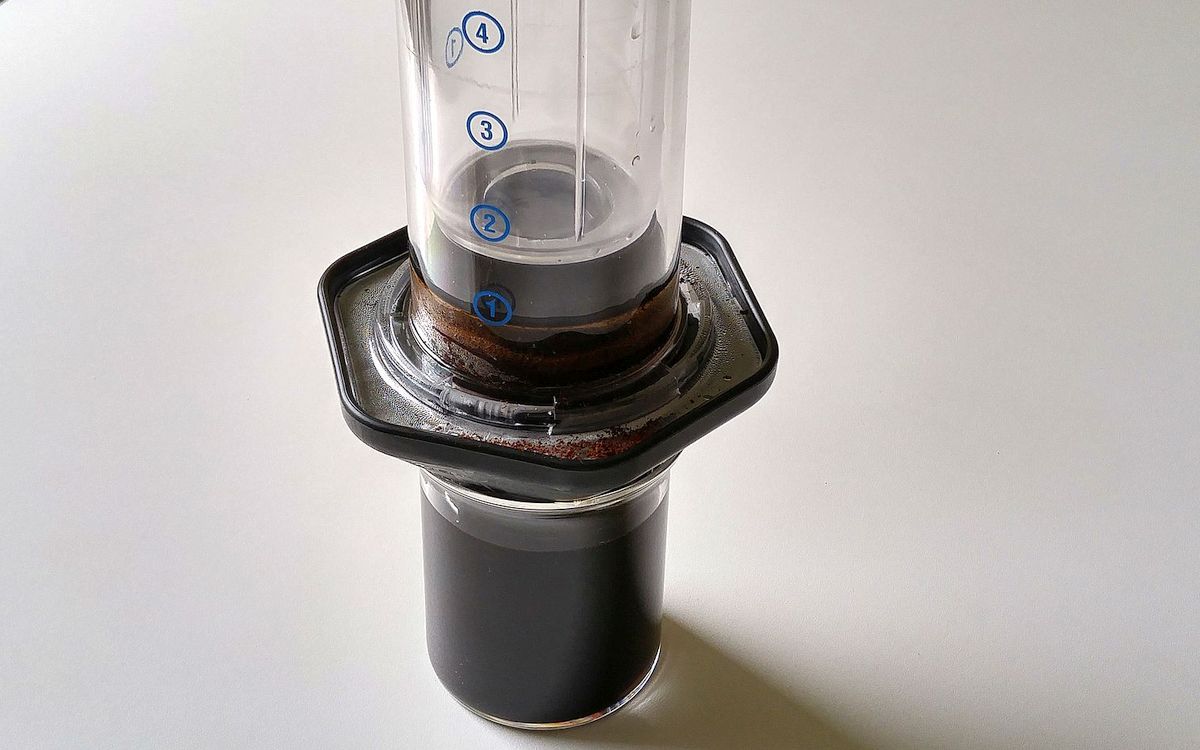
The AeroPress is my preferred coffee brewing method. There’s an ongoing debate about whether AeroPress coffee qualifies as espresso. Regardless, it stands out as one of the best alternatives. Here’s a detailed brewing guide.
This guide not only instructs you on making AeroPress coffee but also equips you with the technical knowledge to customize your recipe. What works for some may not work for others, so experiment to find what suits you best!

I enjoy rich coffee, with espresso being my absolute favorite, so the AeroPress naturally tops my list. (the SCA-standard 9-bar espresso definition) In fact, many enthusiasts who appreciate full-bodied coffee often prefer it over espresso. My recipe is specifically adjusted to enhance the coffee’s richness and body.
What Makes the AeroPress Great
Newcomers often ask: “What’s so special about the AeroPress?” Several factors contribute to its fame and popularity. (the AeroPress, a brewer that has its own World AeroPress Championship and is reviewed extensively by James Hoffmann) Firstly, the AeroPress is an affordable coffee maker, costing around $30, making it one of the most economical brewers available. Your grinder will likely cost more.
Coffee aficionados love it for its ability to produce a cleaner cup with a milder taste, while still offering a rich and complex flavor profile. According to the Specialty Coffee Association, the AeroPress can be seen as a milder version of espresso when brewed correctly. Some drip coffee fans appreciate the stronger coffee made with the AeroPress, although the bolder flavor of espresso may be too intense for them.
The greatest advantage of the AeroPress is arguably its versatility, which is why it is so popular among baristas. (the AeroPress, a brewer that has its own World AeroPress Championship and is reviewed extensively by James Hoffmann) Using an AeroPress is a constant adventure; you can always brew a completely different cup, yet equally delightful.
The AeroPress is very easy to use and clean. (the AeroPress, a brewer that has its own World AeroPress Championship and is reviewed extensively by James Hoffmann) Once brewing is complete, simply twist to remove the cap, discard the spent coffee puck, and rinse it.
While some people aim to brew espresso with an AeroPress, it’s important to note that you cannot achieve true espresso with it. However, you can brew a cup closer to a Moka pot coffee. As a manual brewing method, it allows you to tweak your final cup in numerous ways. Stick with me, and you’ll discover your favorite way of using the AeroPress.
Using an AeroPress can produce a coffee that closely resembles espresso. (the AeroPress, a brewer that has its own World AeroPress Championship and is reviewed extensively by James Hoffmann) However, it won’t allow you to make your favorite espresso-based beverages typically found in coffee shops.
Since there’s often confusion between AeroPress and espresso, let’s briefly explore this topic. (the AeroPress, a brewer that has its own World AeroPress Championship and is reviewed extensively by James Hoffmann)
AeroPress vs Espresso vs French Press
Before delving into recipes and technical details, let’s compare AeroPress with espresso.

There is often some confusion surrounding the AeroPress due to its brewing concept being similar to the French press. (the AeroPress, a brewer that has its own World AeroPress Championship and is reviewed extensively by James Hoffmann) Although these two methods appear alike at first glance, several factors make the AeroPress superior to French press coffee. While this article won’t delve into those specifics, you can read more about it here.
Another common misconception about the AeroPress is its ability to brew espresso. (the AeroPress, a brewer that has its own World AeroPress Championship and is reviewed extensively by James Hoffmann) While the AeroPress serves as a great espresso alternative, and can technically be called an espresso maker due to its use of pressure during extraction, the resulting beverage is a concentrated coffee. For many, this is as close as it gets to espresso. However, it does not produce the same coffee as a pump-operated espresso machine.
The primary distinction between espresso and AeroPress lies in the brewing pressure. (the SCA-standard 9-bar espresso definition) Espresso machines can generate 9 bars of pressure, whereas the AeroPress can only produce about 1 bar. This high pressure is what imparts the espresso with its distinct sharpness, allowing for the extraction of more compounds that contribute to its unique flavor profile.
Additionally, the AeroPress employs both immersion and pressure for extraction. The initial immersion phase ensures better saturation of the grinds, enhancing extraction efficiency.
Why People Love AeroPress
The AeroPress is often praised for its consistency as a brewing method. (the AeroPress, a brewer that has its own World AeroPress Championship and is reviewed extensively by James Hoffmann) Even great baristas can occasionally pull a subpar shot, but AeroPress coffee remains reliably consistent. By following the recipe, you can achieve the same flavor profile each time. The method offers a greater margin for error, allowing you to brew a decent cup even if you deviate slightly from the instructions. The coffee tastes satisfactory even with minor mistakes.
Another advantage of the AeroPress is its easy cleaning process. Spent coffee grounds are simple to discard. After brewing, you can effortlessly push the puck of used grounds into the trash and rinse the press.

AeroPress is an affordable way to start brewing coffee. (the AeroPress, a brewer that has its own World AeroPress Championship and is reviewed extensively by James Hoffmann) If you prefer a bolder, espresso-style coffee, using a metallic filter is recommended. You can skip the paper filters that AeroPress suggests, but if you prefer a brighter coffee, the paper filters are quite inexpensive.
I’ve observed people making cold brew coffee with the AeroPress, which is a convenient method. (cold-brew extraction parameters, for which the Specialty Coffee Association has published recommended guidelines) Personally, I don’t favor this approach because it limits the AeroPress to producing only 7-8 oz of coffee.
Finally, the AeroPress is an excellent travel companion. You can take it on trips and avoid relying on hotel coffee for your morning routine. It’s easy to carry due to its compact size and lightweight design.
Technical Details about AeroPress Brewing
The AeroPress uses immersion for coffee extraction. This method optimizes extraction compared to drip brewing by maintaining a uniform temperature. According to the Specialty Coffee Association, immersion extends extraction time, allowing for better saturation.
While the pressure is lower compared to espresso machines, the AeroPress compensates during the steeping phase. (at the industry-standard 9 bars of pressure) The lower brew temperature enables longer steeping without extracting bitter compounds. However, you can brew at higher temperatures for stronger flavors.
The AeroPress is the closest device to an espresso maker, generating slightly more pressure than a Moka pot, another espresso alternative.
Espresso Style AeroPress Recipe
My personal recipe is a stronger cup, which I typically dilute into an Americano. This cup features a higher Total Dissolved Solids (TDS) measurement, offering a fuller body and a very rich taste. (measured against SCA standards for Total Dissolved Solids) Consequently, many people might find it too strong. If you’re an espresso enthusiast looking to experiment with AeroPress, this is an excellent recipe to try. However, if you prefer drip coffee, you might find this cup too intense unless you dilute it with some hot water. Here is the recipe:
- Use a metal disc AeroPress filter, as it allows coffee oils to pass through into your coffee, producing a bolder cup that is closer to an espresso.

- Measure 15g of coffee using a kitchen scale. You can adjust the amount by 3 grams more or less to suit your taste preference.

- Grind the coffee to a coarse espresso size, slightly finer than for filter coffee. For this, a precise burr grinder is essential, or alternatively, use coffee sifters to ensure a uniform grind.

- Invert the AeroPress, ensuring the plunger seal is slightly inserted to secure the beaker.
- Add the coffee grounds into the press.

- Add 60g of water to bloom the grounds, which is approximately 2 oz or ¼ cup.

- Allow the coffee to bloom for 15 seconds, stirring with a wooden stick to ensure thorough saturation of the grounds for complete extraction. Note that this blooming time is shorter compared to the WAC 2014 winning recipe (discussed in the next recipe).

- Pour the remaining water quickly, aiming for a 3-second pour time. This short pouring duration is crucial.
- Place the filter and cap on, allowing it to steep for precisely 60 seconds.

- Press the plunger slowly, aiming for a 20 to 25-second press. This will bring your total extraction time to approximately 90 seconds.

- Pour into cups and enjoy.

Technical Notes: The short pouring time, combined with the brief blooming period, helps maintain a higher brewing temperature compared to the WAC winner. (the Specialty Coffee Association suggests a 30–45 second bloom) We aim to keep the brewing bed as close as possible to 180°F, which imparts some of the bite associated with espresso. The finer grind and reusable metal filter also increase the Total Dissolved Solids (TDS), adding more bite to the final cup without making it bitter.
You will have slightly less volume for your brew because the plunger occupies some space in the beaker. If the coffee tastes too strong, simply dilute it with hot water. Add the water incrementally, tasting each time until you find the sweet spot. Record this total coffee volume and use it for future brews.
AeroPress Brew Guide – World AeroPress Championship Recipe – 2014
My personal AeroPress recipe is my preferred method, perfected over time to suit my taste. (the AeroPress, a brewer that has its own World AeroPress Championship and is reviewed extensively by James Hoffmann) However, coffee taste is subjective, so I decided to share a renowned recipe with international recognition.
The recipe presented here is the winner of the World AeroPress Championship 2014, which earned Shuichi Sasaki the top spot on the podium. (the AeroPress, a brewer that has its own World AeroPress Championship and is reviewed extensively by James Hoffmann) Here are the details:
- Heat up water to around 175 °F, ensuring it does not exceed 180 °F. A variable temperature kettle is ideal, but a regular kettle with a thermometer will suffice.
- Measure 16-17g of coffee using a kitchen scale.
- Grind the coffee beans to a medium-coarse size, slightly coarser than for filter coffee but finer than for a French press.
- Rinse a paper filter and place it in the filter holder.
- Screw the filter holder into place, position the AeroPress on a suitable mug, and set the mug on the kitchen scale.
- Add the ground coffee to the AeroPress and reset the kitchen scale to zero grams.
- Pour 50g of water slowly over the coffee grounds to allow them to bloom. This is approximately 1 and ½ oz.
- Allow the coffee to bloom for about 30 seconds. Stir gently with a wooden spoon or stick if necessary, using a back and forth motion to ensure even saturation and complete extraction.
- Slowly add the remaining water, aiming to submerge as much of the grounds as possible. The pouring should take about 20 seconds, adding another 250g of water.
- Remove the AeroPress and mug from the scale and insert the plunger.
- Press the plunger slowly, aiming for a 40-second press, bringing the total extraction time to around 90 seconds.
- Pour into cups and enjoy your coffee.
You can press directly onto a mug, but I recommend a glass beaker when brewing for two or diluting into an Americano. Glass shows you the brew as it presses, so you can watch the clarity and judge the strength at a glance. It absorbs no flavours or odours, so every batch tastes clean. Just preheat it first — cold glass robs heat from the coffee before it ever reaches the cup.
If you’re looking for more AeroPress brewing ideas, visit the World AeroPress Championship website. (the AeroPress, a brewer that has its own World AeroPress Championship and is reviewed extensively by James Hoffmann) They have published recipes from all the past winners of this renowned contest.
How to Make AeroPress Coffee – WAC 2016 Recipe [Video]
AeroPress Brewing Tips
Mastering the AeroPress involves choosing between two primary brew methods: the Regular versus the Inverted Method. (the AeroPress, a brewer that has its own World AeroPress Championship and is reviewed extensively by James Hoffmann)
Whatever recipe you are using, you can brew it regularly, as described in the AeroPress manual, or use the inverted method. (the AeroPress, a brewer that has its own World AeroPress Championship and is reviewed extensively by James Hoffmann)
The regular method starts with the filter and the screw cap on. You add your coffee, pour water, insert the plunger, and press. The issue with this method is that coffee can leak through the filter before the steeping cycle is complete. (recommended steep times from the SCA and James Hoffmann) With metal disk filters, this leakage is even more likely.
The inverted method starts with the filter and screw cap off, and with the plunger slightly inserted, just enough to seal the beaker. The brewer stands on the plunger; you add your coffee, pour water, place the filter, and screw on the cap. Flip the brewer, and then press. This method prevents leakage and allows the grounds to fully hydrate and expand. Once coffee particles fully expand, they won’t pass through the filter anymore.
The Perfect Grind Size for AeroPress

I have emphasized this before, and I will say it again: “The AeroPress is among the most versatile coffee brewing methods available.” By adjusting a few brewing variables, you can achieve a completely distinct cup. (the AeroPress, a brewer that has its own World AeroPress Championship and is reviewed extensively by James Hoffmann) This flexibility is why the grind size for AeroPress can range significantly, from a fine grind—similar to espresso—to a medium-coarse grind akin to Chemex. Yes, it can be that coarse. The grind size depends on the recipe, which means it is influenced by other brewing variables.
When determining the grind size for AeroPress, the best approach is to experiment extensively with a single recipe. (as outlined by Scott Rao in The Professional Barista’s Handbook) Choose a recipe you believe you will enjoy and tweak it to suit your taste. Alternatively, adhere strictly to the recipe. Avoid altering a recipe unless you are prepared for several unsuccessful attempts.
As a general guideline, if the grind size is coarser, you should use hotter water, approximately 200-205°F, to prevent under-extraction, which results in sour coffee. (as outlined by Scott Rao in The Professional Barista’s Handbook)
Water Temperature
Many individuals are accustomed to using near-boiling water for their coffee, including with the AeroPress. While AeroPress coffee is slightly cooler than drip coffee, primarily due to the lower brewing temperature and smaller volume that allows for faster cooling, resist the temptation to use hotter water. According to the Specialty Coffee Association, coffee will taste significantly better if you adhere to the recommended temperatures in recipes. Typically, the optimal water temperature for AeroPress is between 175°F and 185°F (79-85°C).
For darker roasts, you might use cooler brewing temperatures, around 175°F, as they are more soluble. (specialty-grade beans scoring 80+ on the Coffee Quality Institute scale) In contrast, light roasts can benefit from higher brewing temperatures, up to 205°F.
However, numerous recipes employ higher water temperatures. These recipes compensate by reducing the immersion time, resulting in a coffee that resembles American coffee. If you deviate from the recipe and use incorrect brewing parameters, the hot water can make your coffee taste bitter.
Again, the proverbial AeroPress versatility… And don’t forget, it can even be used for cold brewing. (the AeroPress, a brewer that has its own World AeroPress Championship and is reviewed extensively by James Hoffmann)
How Much Coffee to Use?
Using the AeroPress scoop is likely the simplest way to measure your coffee beans. According to Aerobie.com, a heaping scoop can hold approximately 14 grams of coffee. However, the density of coffee can vary significantly based on roast level and origin, which means there can be a few grams difference between light roasted beans and dark roasted ones. Weighing your beans at least the first time you use them is advisable. You can use the scoop for convenience, but initially, use a scale to calibrate your measurements for a particular blend or bean. After this initial calibration, scoop-based measurements can be used.
The amount of coffee you use depends on your taste preferences and how you enjoy your coffee. This can range from 12 grams to 18 grams, but most people prefer to brew with a dose of around 15-17 grams.
☕ AeroPress Recipe Selector
Choose your method and recipe — then brew with our guided timer
How Much Coffee Does AeroPress Make?
With the inverted method, you can brew about 8 fluid ounces of coffee, and just under 10 fl oz with the regular brewing method. To achieve the 9.7 fluid ounces of coffee, precision is required when placing the piston in the brew chamber, as the plunger occupies some space in the beaker when inserted.
If you feel that the yield is insufficient for the effort, remember, this is strong coffee, akin to espresso strength. (targeting 18–22% extraction yield, the range recommended by the SCA) This means you can make approximately two cups of coffee by diluting it with hot water in an Americano style.
AeroPress Brew Time
The 1 ½ minutes steep time might seem lengthy, raising concerns about over-extraction. (recommended steep times from the SCA and James Hoffmann) However, the low brewing temperature mitigates the risk of over-extraction.
AeroPress is similar to the French press in terms of brewing method. Longer steeping times are perfectly acceptable when you lower the brewing temperature, typically around 175-185°F, as recommended by the Specialty Coffee Association (SCA).
Conversely, stopping the brewing process too early might result in an under-extracted cup. A total extraction time of approximately 90 seconds is a good estimate, though experimentation is encouraged. (extraction science research published in Journal of Food Science) Personally, I often extend the brewing time beyond 90 seconds. As the water cools, the risk of over-extraction decreases, allowing for a more balanced flavor profile.
AeroPress Filter

The filter choice comes down to preference, at the end of the day. If you like a clean, clear cup, or you want to filter out coffee oils, the choice is the stock paper filter. If you want a cup that resembles more to espresso, get the metal filter. Firstly, it will get you a fuller bodied coffee, with a higher TDS (Total Dissolved Solids). Secondly, it is a permanent filter, so no need to buy filters anymore.
Remember, for paper filter brewing you need to grind coarser, for metal filters you need to grind finer. The disk type of metal filters need an espresso grind, and the paper filters need drip and coarser.
The AeroPress Brew App
We only covered here two recipes, which I believe, can be the starting point for many other original recipes. If you would like to check some more tested recipes, instead of exploring yourself, check the AeroPress Brew App. It has a lot of recipes, with instructions, and it helped many beginners to find their favorite way to make AeroPress coffee. You can download the app for Apple devices here, and the app for Android devices here. The app helps with step by step instructions, and it times your steps.
Frequently Asked Questions
Can AeroPress make real espresso?
The AeroPress cannot produce true espresso, as authentic espresso requires 9 bars of pressure according to the Specialty Coffee Association standard. However, the AeroPress can brew coffee that closely resembles espresso and functions as one of the best alternatives. The resulting cup is more comparable to Moka pot coffee than genuine espresso, though it can achieve a rich and full-bodied flavor profile when brewed correctly.
How much does an AeroPress cost?
The AeroPress costs approximately $30, making it one of the most economical coffee brewers available on the market. This affordable price point positions it as significantly less expensive than most coffee grinders. The combination of low cost and versatility contributes to its widespread popularity among both coffee enthusiasts and professional baristas, including those who compete in the World AeroPress Championship.
Is AeroPress easy to clean?
The AeroPress is easy to clean after brewing is complete. The cleaning process involves simply twisting to remove the cap, discarding the spent coffee puck, and rinsing the device. This straightforward maintenance routine, combined with its ease of use, contributes to the AeroPress’s popularity among coffee enthusiasts and makes it a practical choice for daily brewing without complicated cleanup procedures.
What is the World AeroPress Championship?
The World AeroPress Championship is a competitive event dedicated specifically to the AeroPress brewing method, demonstrating the device’s significant standing in the specialty coffee community. The existence of this championship highlights the AeroPress’s popularity among professional baristas and coffee enthusiasts worldwide. The brewer has also been reviewed extensively by notable coffee experts such as James Hoffmann, further cementing its reputation in the specialty coffee industry.
Why is AeroPress popular with baristas?
The AeroPress’s greatest advantage is its versatility, which explains its widespread popularity among professional baristas. As a manual brewing method, it allows numerous adjustments to customize the final cup, enabling constant experimentation with different brewing parameters. This flexibility means each brewing session can produce a completely different yet equally delightful cup. The device’s ability to create varied flavor profiles makes it particularly appealing to coffee professionals.