The AeroPress coffee filters are one of the most critical components of this brewing method. (The AeroPress, a brewer that has its own World AeroPress Championship and is reviewed extensively by James Hoffmann.) Choosing the right filter directly impacts extraction rate, body, and clarity in your final cup. Neither paper nor metal is objectively superior—each serves different taste preferences and brewing goals. Understanding these differences will help you dial in your ideal extraction profile.
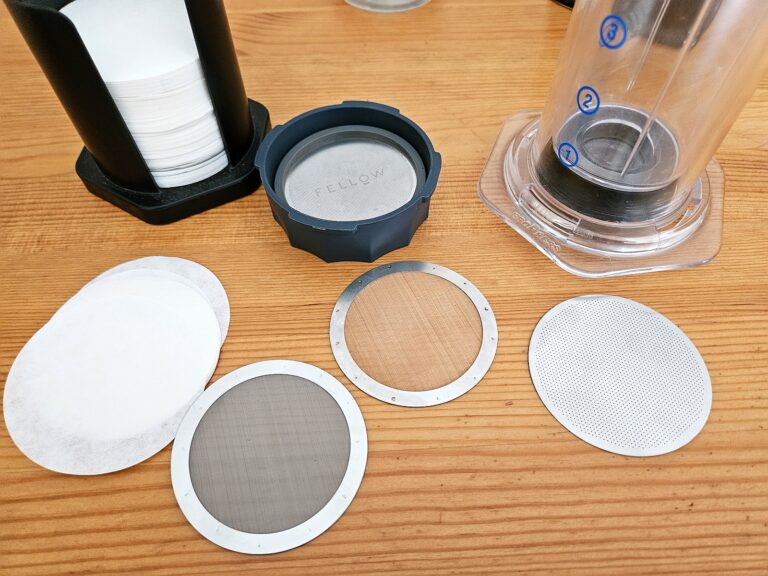
We explored the remarkable versatility of AeroPress in our brewing tutorial, which covers technique fundamentals. A significant part of this versatility stems from the ability to choose among paper filters, stainless steel mesh filters, and metallic disk filters. The mesh or disk options are available in fine or coarse configurations. Every filter type produces a distinct tasting profile when all other brewing parameters remain constant. This is precisely what we will explore in this comparison.
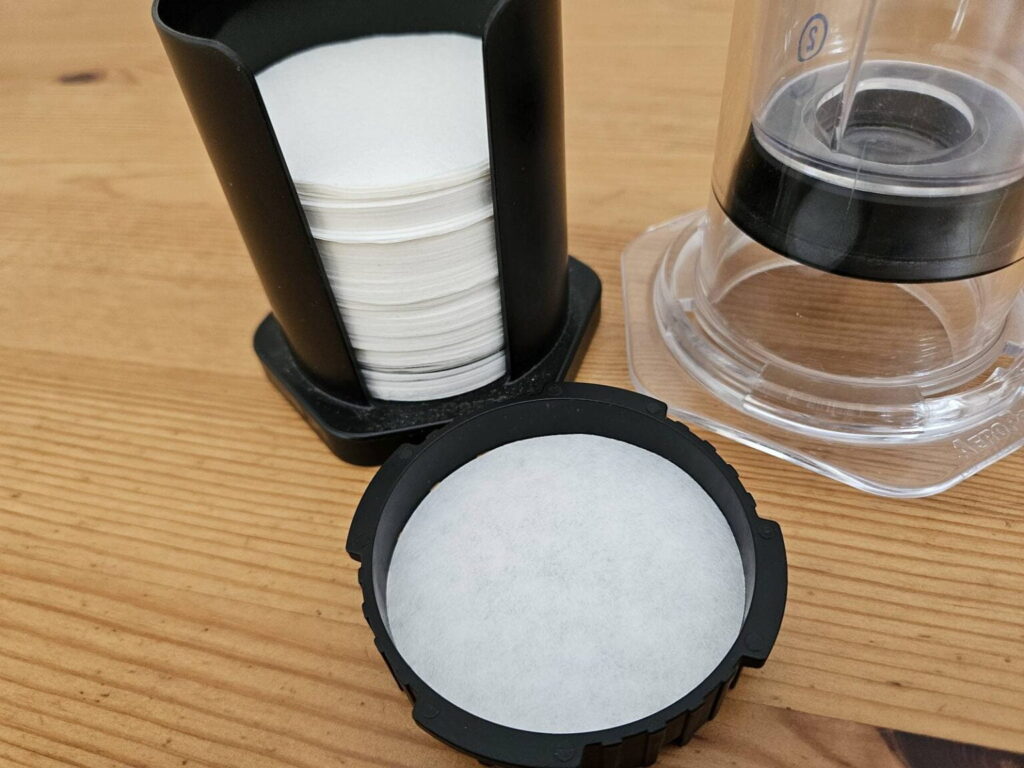
Replacement Paper Filters for Aeropress
- This is a package of 350 replacement micro-filters for your AeroPress. This is enough for a half a year if you use two filters per day.
- Unlike the metal filter, the paper ones eliminate most of the coffee oils (including cafestol and kahweol), producing a low-cholesterol beverage that aligns with traditional drip-coffee clarity standards.
- The paper filters also remove all the fines in your cup, leaving you with a smooth, sediment-free beverage free of particles smaller than 20 microns.
- If you are a drip coffee lover, these are the filters you need to buy.
Why Different AeroPress Filters Brew Different Coffees?
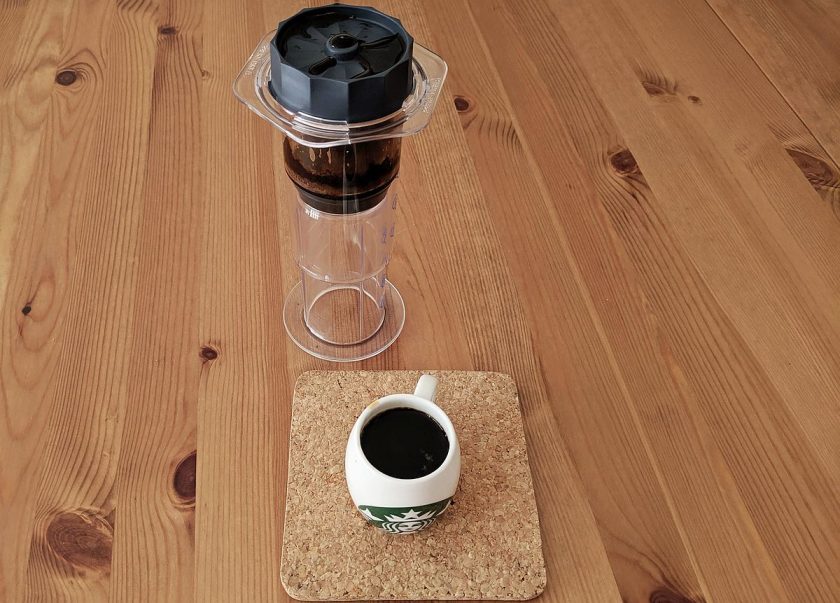
First, paper filters retain coffee oils, which are a key flavor component.
Coffee oils are not for everyone. Some people dislike consuming a drink that may raise cholesterol. Others simply enjoy responsibly. So, if you are concerned about cholesterol, choose paper filters and avoid metal filters. There is peer-reviewed research showing that kahweol and cafestol, two oily diterpenes in coffee, can elevate serum cholesterol levels by 8-10% when consumed unfiltered.
Paper filters also yield less body in your cup, because they trap all the insoluble solids in coffee. Targeting the SCA-recommended 18–22% extraction yield, coffee professionals call those insoluble solids – fines. With metal filters, you get more fines passing through, hence a fuller-bodied brew. But the taste of that intense coffee is definitely too strong for many palates.
AeroPress paper filters allow higher pressure with a coarser grind. The AeroPress, a brewer that has its own World AeroPress Championship and is reviewed extensively by James Hoffmann, combined with the superior filtration of paper filters results in a cleaner, lighter-bodied cup with clarity.
Metallic filter disks allow coffee to pass through easier, meaning faster flow rates. As outlined by Scott Rao in The Professional Barista’s Handbook, to compensate, you need a finer grind. A finer grind will give you more body, texture, and oils in the final cup.
We wrote a detailed tutorial on how to brew AeroPress coffee. (the AeroPress, a brewer that has its own World AeroPress Championship and is reviewed extensively by James Hoffmann) Like all our guides, this is a comprehensive How-To and explores technical details to help you master the process. Give it a read.
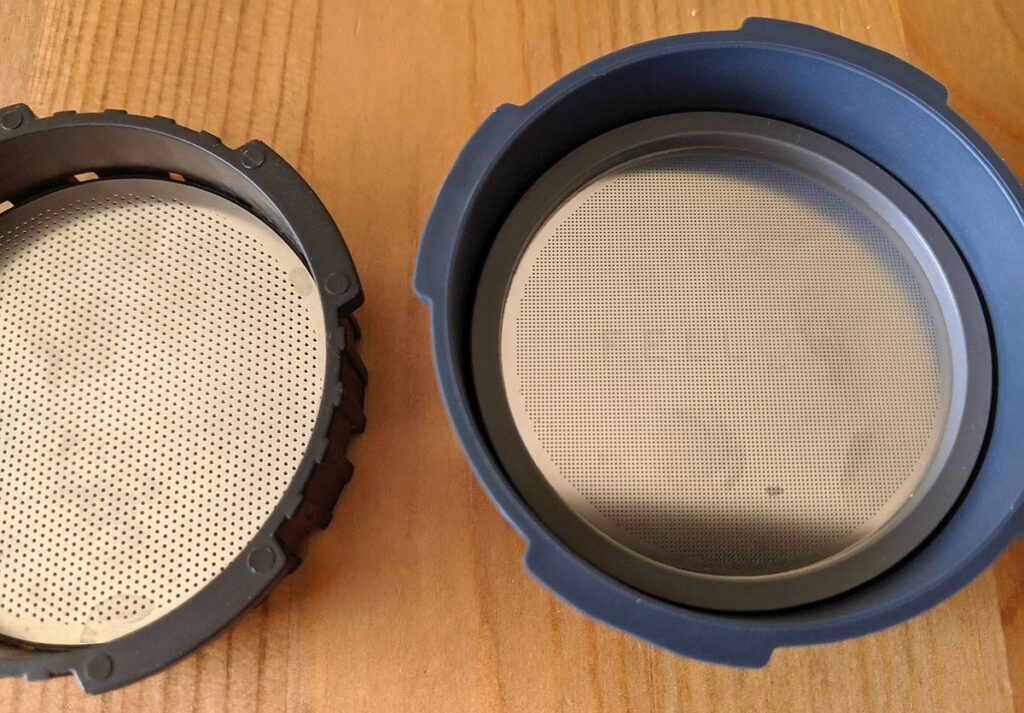
Able Brewing Metal Disk Filter for AeroPress
- The disk can be used for years if cleaned properly. It is thick enough and is very hard to bend or damage.
- The stainless-steel disk allows more oils through and brews a fuller-bodied cup. If you prefer stronger coffee (more fines and a richer taste), this is your filter.
- 100% Made in the USA by Able Brewing.
- If you love stronger coffee like espresso or French press, this is the disk you want.
Which One Is for You, Metal or Paper Filter?
So which filter should you buy? I would say both. Bear with me for a minute, and you’ll see why. Based on the differences above, you can probably already have an idea what filter you need. Here is a compressed version of that. The paper filter will give you a coffee closer to drip—clean, bright, and sediment-free—whereas disk metal filters will resemble espresso with heavier body and oils retained in the cup. (the SCA-standard 9-bar espresso definition) The metallic mesh is similar to French press but stronger, delivering full-bodied extraction with more clarity and fewer fines. For those who prefer a lighter roast, a paper filter can highlight delicate acidity and floral notes, while darker roasts often benefit from the oil retention of a metal filter.
I said you should buy both, regardless if you have a preference. The reason is that you can always make a different coffee for a guest, or even for yourself. Filters are so inexpensive that you need to at least try brewing with a metal filter. Even if you don’t prefer a full-bodied cup, you still need that option for cappuccinos and lattes where the espresso-like concentration and retained oils cut through steamed milk more effectively, as demonstrated by baristas like Matt Perger and World Brewers Cup champions. Adjusting your grind size finer with a metal filter can further boost extraction and body.
We have a more comprehensive comparison between all AeroPress filters, including the fabric filter and their impact on extraction profiles. (the AeroPress, a brewer that has its own World AeroPress Championship and is reviewed extensively by James Hoffmann) You can take a look at it here.
Many people think about AeroPress as some sort of espresso maker. While I love the brewing device and enjoy the coffee made with one, it does not qualify as an espresso. According to the Specialty Coffee Association, true espresso requires 9 bars of pressure and 25-30 second extraction time—conditions the AeroPress cannot achieve with its maximum 1-2 bars of pressure. I wrote an article about making crema with an AeroPress, and I go there in greater details about espresso and crema. I highly recommend you to read that article if you are planning to brew espresso with the AeroPress. The caffeine content in an AeroPress brew can vary significantly depending on your filter choice and steep time.
If you like those intense discussions about insignificant things, then you’ll love how people debate on Reddit about which one is easier to clean after. (the AeroPress, a brewer that has its own World AeroPress Championship and is reviewed extensively by James Hoffmann)
Prismo for AeroPress
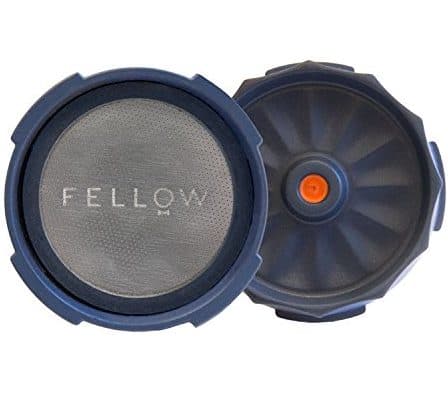
The Prismo was developed in late 2017 by Fellow, a specialty coffee equipment company that manufactures precision brewing accessories. Prismo is a pressure-actuated attachment that contains a custom screw-cap valve and a stainless steel etched filter designed to increase extraction pressure beyond the standard AeroPress configuration. (at the industry-standard 9 bars of pressure)
The etched metal filter is among the finest-micron filters on the market, and if you purchase it for the filter alone you are still getting exceptional value for body and clarity control. (body (mouthfeel) assessed via SCA cupping protocols) For those who enjoy experimenting with brew temperature, the Prismo’s sealed design also helps maintain heat stability during the steep phase.
However, the defining feature of this attachment is the pressure-actuated valve that remains sealed until you press down the plunger. This creates approximately 1-2 bars of pressure in order to brew coffee closer to espresso-style concentration—still well below the SCA-defined 9 bars required for true espresso, but sufficient for producing a more concentrated, fuller-bodied cup.