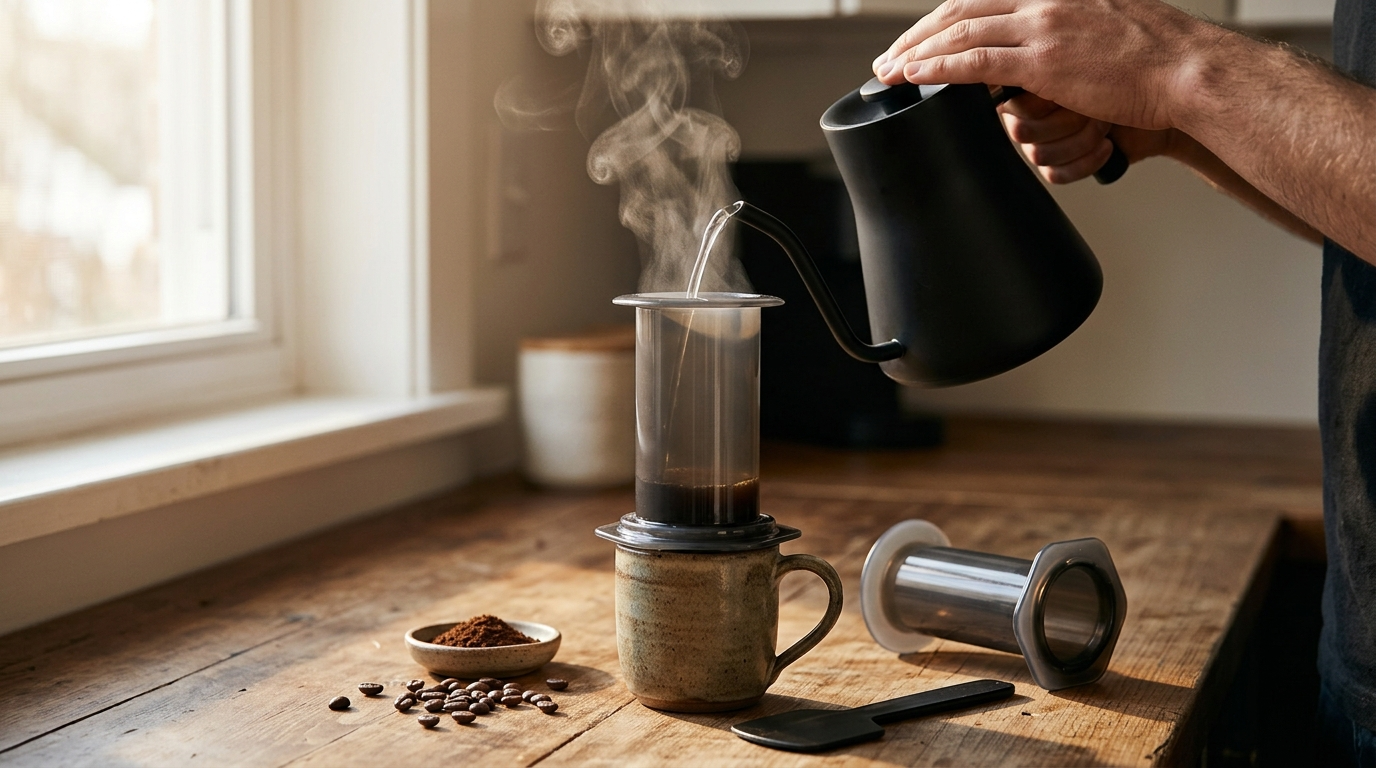
Your AeroPress coffee can taste sour or bitter when your brewing water is too cool or too hot. The right temperature helps bring out sweetness and balance, but the ideal setting depends on your beans and recipe. I recommend adjusting the temperature in small, measured steps to find what works best for your brew.
Dial In AeroPress Water Temperature Without Guesswork
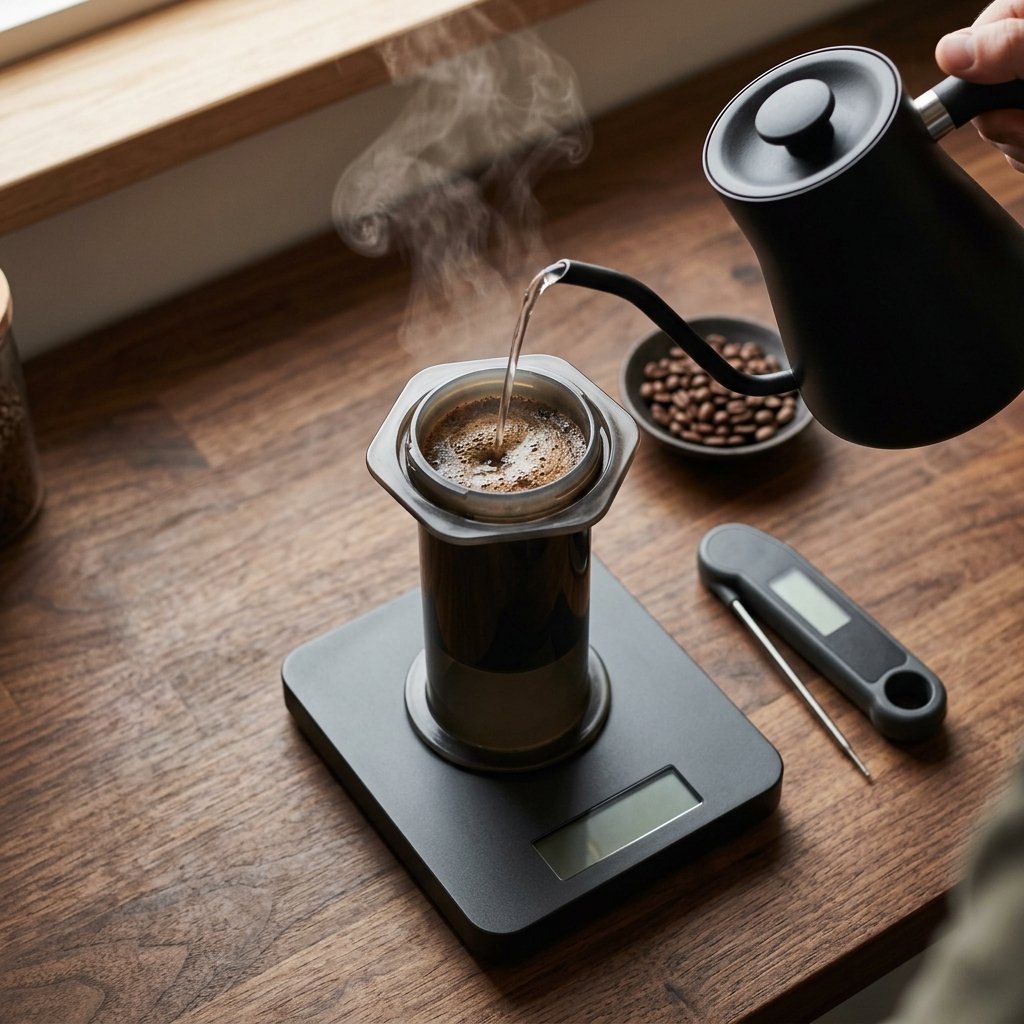
AeroPress brewing generally works well within 195–205°F (90–96°C). Use a thermometer or a kettle with a temperature display to reach this range, then repeat a successful brew. With a variable-temperature kettle, set your target and check the water shortly before pouring.
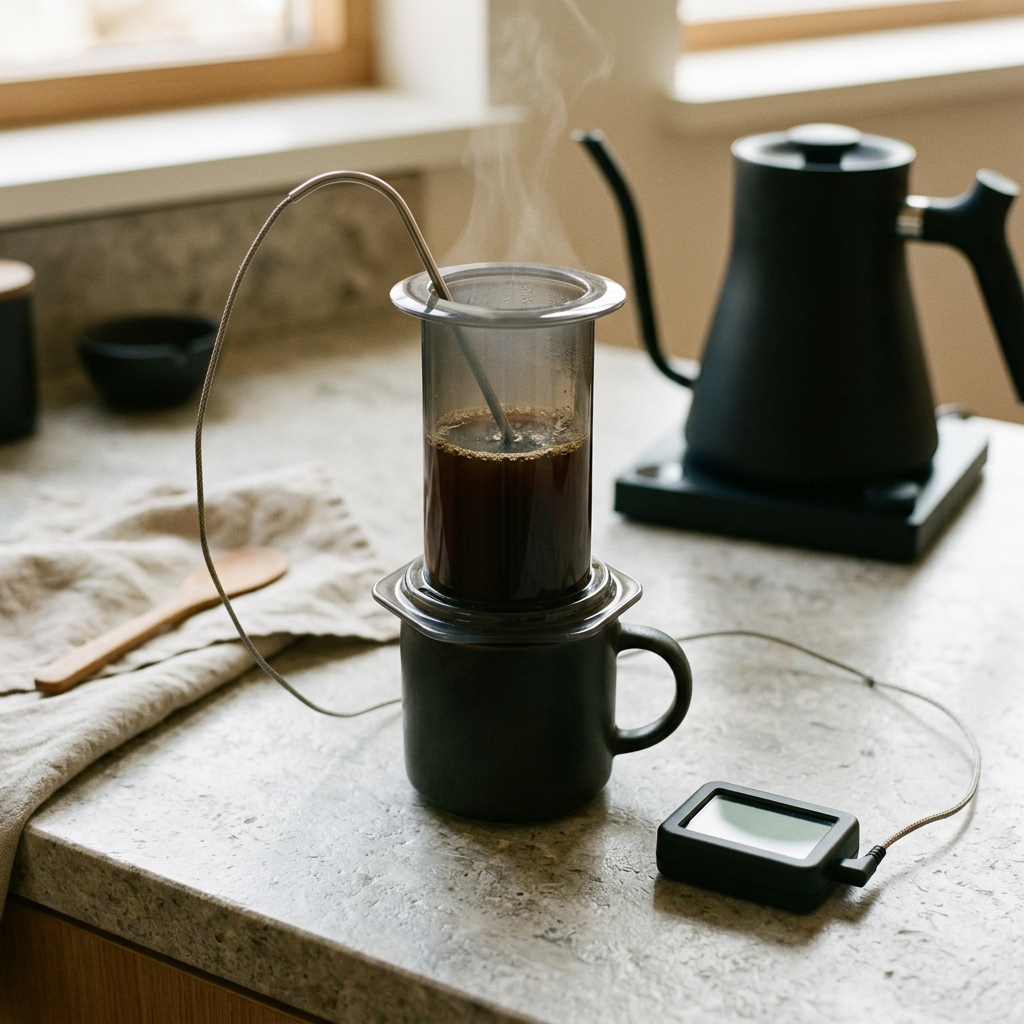
With a basic kettle, boil the water, then let it cool before brewing. Don’t pour immediately after a vigorous boil; the water may be above 205°F. Waiting at least 30 seconds can help, but cooling rates vary, so treat that wait as an estimate, not a precise measurement.
A cold AeroPress can cool water on contact, so I recommend running hot water through the empty chamber for 30 seconds before brewing. A cold mug can also lower your coffee’s temperature, so warm it first to reduce that drop.
Testing Temperature Consistently
To test temperature consistently, keep your recipe steady: use the same coffee dose, grind, water amount, steep time, and pressing technique. Change only the water temperature. Taste your cup, note whether it seems sharp, flat, or harsh, and record the kettle setting.
Adjust the setting within the established 195–205°F range for your next brew, then compare the results. Changing several variables at once makes it difficult to identify temperature’s effect. If your kettle has no display, check the water with a kitchen thermometer just before pouring instead of assuming it remains at its post-boil temperature.
Record the reading and result; a simple log helps you reproduce a cup you like.
How Temperature Affects Extraction
Water extracts soluble compounds from coffee grounds, and temperature affects how quickly and readily those compounds dissolve. The AeroPress’s short brew and pressure-assisted plunge don’t make temperature irrelevant: the water still needs to extract enough flavor during contact with the grounds.
Within the 195–205°F (90–96°C) range, small adjustments can shift the balance. Hotter water generally extracts compounds more readily, which may bring out more flavor from coffee that tastes muted or underdeveloped. However, greater extraction isn’t always better; different compounds dissolve at different rates, and excessive extraction can make a cup harsh or bitter.
Therefore, understanding extraction gives you a framework for interpreting flavor clues, though taste still reflects several brewing variables.
Reading Flavor Clues
Lingering bitterness can indicate over-extraction. Cooler water tends to extract compounds less readily. Sourness can mean the cup hasn’t developed enough sweetness and balance, while a thin or sharp taste may also make temperature worth investigating.
These flavors are clues, not diagnoses, because grind, brew time, and other recipe choices also affect extraction. A cup can taste brighter and more pronounced when extraction favors sharper notes, while more balanced extraction can let sweetness and body come through.
The effect depends on the coffee, so no single setting produces the same flavor in every brew. Roast level matters too: lighter coffees may need more heat to develop their flavors, while darker coffees can become harsh if brewed too hot. Focus on whether the setting helps your coffee taste balanced rather than assuming hotter or cooler is always better.
The relevant brewing temperature is the water’s temperature when it meets the grounds, not simply the kettle’s reading after boiling. A cold chamber can cool the water on contact, and a delay after heating can change its temperature.
Measure close to the pour, and change temperature without altering other recipe variables to judge its effect more clearly. If your cup tastes flat, sharp, or harsh, consider temperature alongside other brewing factors rather than treating it as the sole cause.
What Water Temperature Works Best for Light, Medium, and Dark Roasts?
Water temperature affects extraction, but it cannot guarantee a specific flavor for each roast. Light, medium, and dark coffees respond differently, and published recommendations vary. Stumptown’s general AeroPress guidance is 195–205°F (90–96°C), although roast-specific advice can fall outside that range, especially for dark beans.
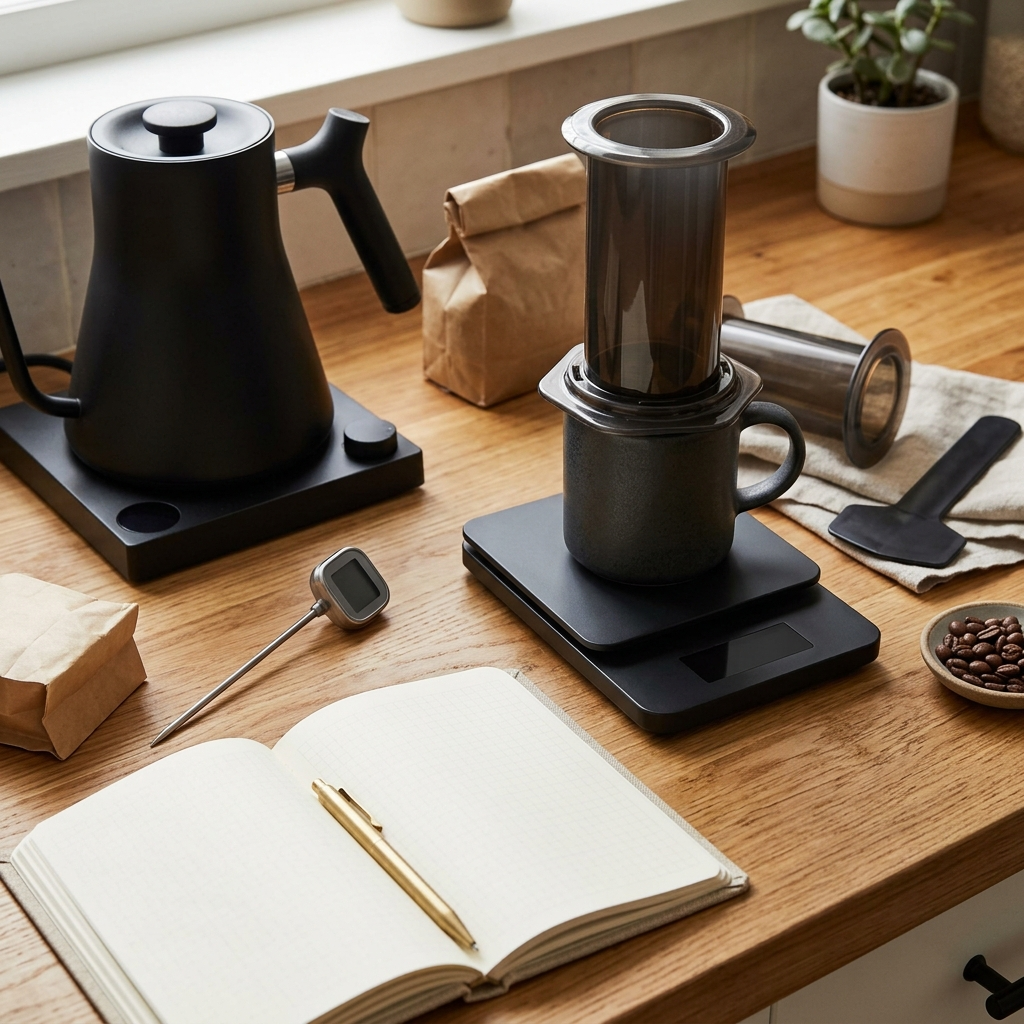
One recommendation calls for 185°F (85°C) for light and medium roasts, and 175°F (80°C) for dark roasts. AeroPress Water Temperature: 3 Roasts, 1 Perfect Brew instead suggests 200–205°F for light, 195–200°F for medium, and 175–185°F for dark roasts. Treat these as distinct approaches rather than averaging them into a single rule.
Light Roasts
For light roasts, the higher-temperature approach aims to bring out flavors that may taste muted at cooler temperatures. If your cup tastes flat, try the hotter end of that guidance. The 185°F recommendation also provides a reasonable starting point; I recommend letting your coffee’s taste guide adjustments rather than assuming one temperature suits every bean.
Medium Roasts
For medium roasts, the recommendations differ: one calls for 185°F, while the other suggests 195–200°F. Start cooler if your coffee tastes harsh, or try the higher range to explore a different extraction approach. Keep your other recipe variables steady as you compare temperatures, so you can identify each adjustment’s effect.
Dark Roasts
For dark roasts, both sources recommend lower temperatures than for light roasts: one suggests 175°F, and the other gives a range of 175–185°F. Darker coffees can become harsh at higher temperatures. If your dark roast tastes bitter or ashy, try the lower end of the relevant guidance; if it tastes thin, adjust cautiously, since each coffee may respond differently.
Next, once you’ve explored roast-specific temperatures, consider how grind and contact time can shift extraction too.
How Grind Size and Brew Time Change Your Temperature Choice
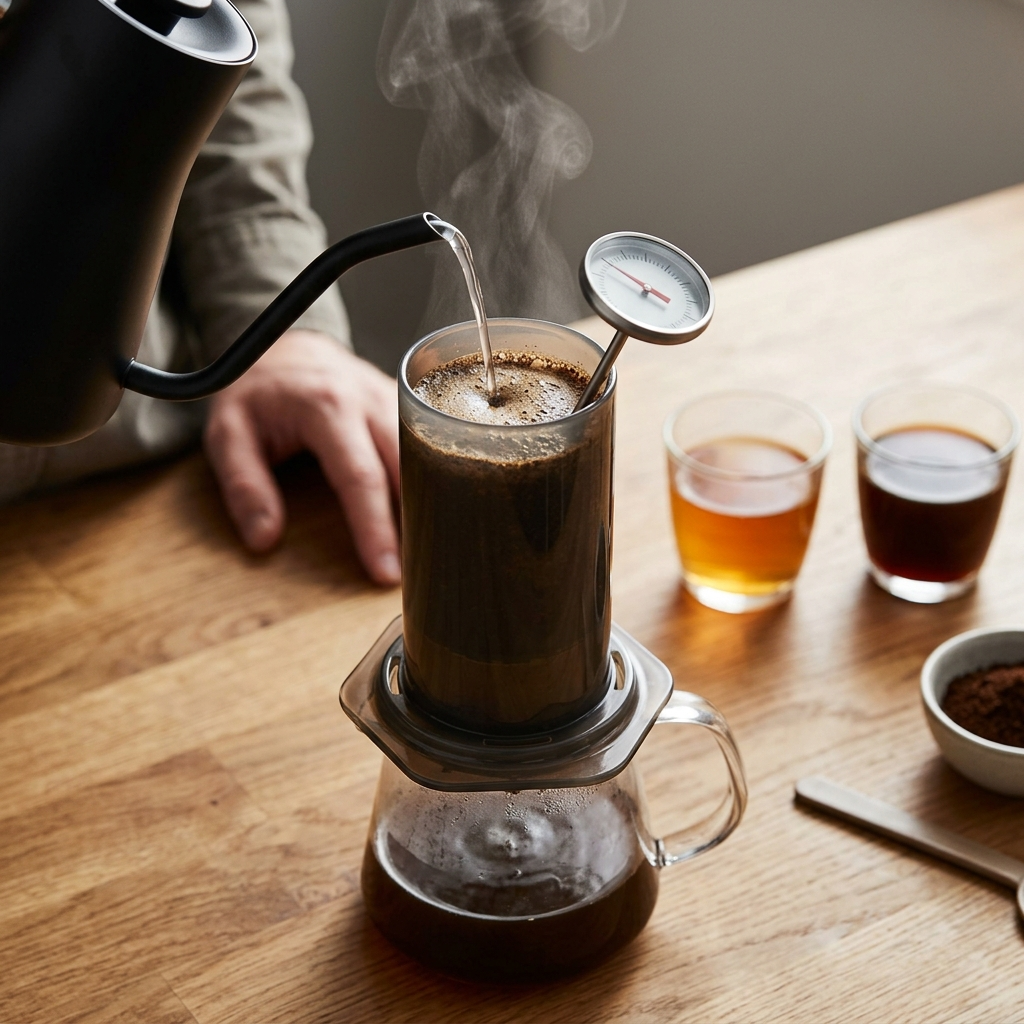
Temperature is one of several variables that shape extraction; grind size and contact time also matter. When you change either, keep the temperature steady so you can isolate its effect. Finer grinds expose more coffee surface to water and can increase extraction, while coarser grinds expose less and can reduce it.
Adjusting Grind Size
If your brew tastes thin or underdeveloped, I recommend trying a slightly finer grind before raising the temperature. If it tastes harsh, try a slightly coarser grind before lowering the temperature. Change one variable at a time; adjusting grind and temperature together makes it hard to identify what changed the result.
Adjusting Brew Time
Brew time is another control. The AeroPress recipes in the guidance specify different timings: one calls for roughly 2:00 total, while another specifies 2:00 to 2:10 from the first pour through the end of the press. These timings apply to their respective recipes, not to every AeroPress brew.
A longer steep can increase extraction, so if your brew tastes overly intense, shorten the steep or adjust the grind before changing water temperature. If the cup tastes weak, try increasing contact time before raising the temperature. These adjustments help you assess each variable’s effect.
Treat grind size, brew time, and temperature as linked controls, not as interchangeable settings. A medium-fine grind with a short brew can taste different from a coarser grind with a longer steep, even when both use water in the 195–205°F range.
Recipe-Specific Settings
For a light roast that tastes flat, the cited recipe recommends 201–205°F alongside its specified grind and timing. Treat those settings as a package when testing the recipe; temperature alone may not explain the result. Once you have a consistent starting recipe, adjust grind or steep time in small steps and taste before making another change.
Key Takeaways
Treat temperature as one part of your brewing recipe, not a fix for every flavor problem. I recommend starting between 195 and 205°F, then adjusting based on the roast and how your coffee tastes.
If your cup tastes flat or sharp, assess the full brewing method and change one variable at a time. Keep your dose, grind, water amount, and timing consistent while you test small temperature adjustments.
If a recipe pairs a temperature with specific grind and timing instructions, try those settings together first. This gives you a repeatable starting point and helps you refine your cup more systematically.
Frequently Asked Questions
What is the best temperature to brew coffee in an aeroPress?
As noted earlier, the broad starting range is 195–205°F (90–96°C). Choose a point within it based on the coffee and your taste, while keeping the rest of the recipe consistent as you adjust.
What is the criticism of aeroPress?
The information provided here does not identify a specific criticism of the AeroPress. It focuses on brewing temperature and does not establish a broader verdict about the brewer.
Does aeroPress give you microplastics?
The available information here does not address whether using an AeroPress exposes you to microplastics. It does not provide evidence to support a yes-or-no answer.
Is 200 degrees too hot for coffee?
No: 200°F falls within the stated 195–205°F starting range for AeroPress brewing. Whether it suits a particular cup depends on the coffee and the rest of the recipe.