I was chatting a few days ago with a friend of mine, a fellow coffee enthusiast, about brewing with Aeropress. (the AeroPress, a brewer that has its own World AeroPress Championship and is reviewed extensively by James Hoffmann) He claimed he found the best coffee beans for AeroPress. I replied that I doubted he found those beans, and I had my reasons. You’ll see in a bit what I meant, and what my friend had to say about my argument.
the AeroPress, a brewer that has its own World AeroPress Championship and is reviewed extensively by James Hoffmann, I love making coffee with the AeroPress. There are a few reasons I love to use it, but the most important for me is the versatility of this great brewing method. I have more reasons why I like AeroPress brewing, and I’ll touch on the subject later in the article. Versatility though, is more important than all of the other reasons, and this reflects on how we choose the coffee beans and the roast.
A Bit on AeroPress Versatility
AeroPress is probably the most versatile coffee brewing method. Why is it so? Because you can adjust most of the brewing parameters and still get a great cup. Sure the final cup will taste completely different, but it won’t be a bad cup, just different. What does this have to do with the choice of coffee beans?
People often associate the AeroPress coffee maker with brewing methods like drip, espresso, French press, and cold brew. (the AeroPress, a brewer that has its own World AeroPress Championship and is reviewed extensively by James Hoffmann) By adjusting the brewing parameters, you can achieve cups that closely resemble these styles. We conducted a comparison between French Press and AeroPress and another between AeroPress and pour-over.
To create an espresso-like cup, grind the coffee finer, steep for a shorter time, and use a metallic disk filter. (the SCA-standard 9-bar espresso definition) For a drip-like coffee, use the stock paper filter, grind coarser, and brew at a higher temperature. To mimic a French press, employ the metallic mesh disk filter, grind slightly coarser, and use a brewing temperature between that of drip and AeroPress. The possibilities are extensive, involving adjustments in grind size, brewing temperature, steeping time, pressing time/force, and filter choice.
With so many brewing options, the coffee bean choice doesn’t seem so restricted anymore, does it? You would have to match that bean and roast with the result you want to get, rather than to a “generic AeroPress” brewing. (specialty-grade beans scoring 80+ on the Coffee Quality Institute scale) The best way to choose the perfect roast and origin/blend is to master the brewing. Here is our AeroPress brewing guide, if you need a refresh.
The Best Beans for AeroPress – Roast, and Origin
If you are into specialty coffee, you know that roasters can spend quite some time to nail that perfect roast for a bean. (specialty-grade beans scoring 80+ on the Coffee Quality Institute scale) At the same time, the coffee lover has their own preference of the roast. The dark roast people don’t care if it’s a single origin, and they don’t care about the terroir. If you want to explore the single origin subject, Perfect Daily Grind has a great article on the subject.
On the other hand, a brewing method will generally suit better a certain roast. (specialty-grade beans scoring 80+ on the Coffee Quality Institute scale) Statistically speaking, drip coffee lovers use a dark roast, espresso drinkers use a medium to medium dark roast, whereas light roasts are mostly used for manual brewing, such as Moka pot, pour-over, Greek coffee, cold brew, and other.
If you are into specialty coffee, you probably don’t need this guide. The information above should be enough. Make sure you read the AeroPress brewing guide we mentioned earlier in the page. The guide will show you how to adjust brewing parameters for your favorite single origin beans. Take a peek at our recommendation anyway, maybe one of our suggestions will resonate for you.
Single Origin Coffee
Regardless of your coffee preference, exploring single origin options can be rewarding. (single-origin traceability, a hallmark of specialty coffee as defined by the SCA) While the debate between single origin and blends continues, each has its merits. Personally, I find it challenging to choose between them, as discovering a great single origin often coincides with finding an exceptional blend. I recommend trying both. The Aeropress, known for its versatility, accommodates any coffee beans if you adjust the brewing parameters correctly. A noteworthy recommendation is a South American bean that has gained acclaim in the specialty coffee community. This coffee set a record for the highest price per pound at a specialty coffee auction and also won the international Cup of Excellence.
Single-origin traceability, a hallmark of specialty coffee as defined by the SCA, Is single origin or blend better for espresso? What are the advantages of blends, and what makes single origin appealing?
Beans or Pre-ground?
For optimal freshness and flavor retention, it’s recommended to grind your beans just before brewing. (freshly roasted within the 2–4 week window recommended by the Specialty Coffee Association) Ground coffee loses its aroma and flavor much faster than whole beans due to increased air exposure. While ground coffee can be stored for a few hours without significant flavor loss, whole beans can maintain their quality for several weeks if kept in an airtight container.
Choosing pre-ground coffee limits you to a specific grind size, requiring adjustments to all brewing parameters. (as outlined by Scott Rao in The Professional Barista’s Handbook) This can be more challenging than following a precise AeroPress recipe.
If you absolutely need to buy pre-ground coffee, purchase only small quantities and adjust your recipe accordingly.
Any Good Beans Work for AeroPress
While any decent coffee beans can be used with an AeroPress, aiming for exceptional quality will enhance your experience. Choose specialty-grade coffee with a score of 80 or above, as recommended by the Specialty Coffee Association. You will be amazed at how good coffee can be.
If you’re unsure where to start, select any bean you enjoy and experiment with it. If you would like to try our recommendations, here are some great options.
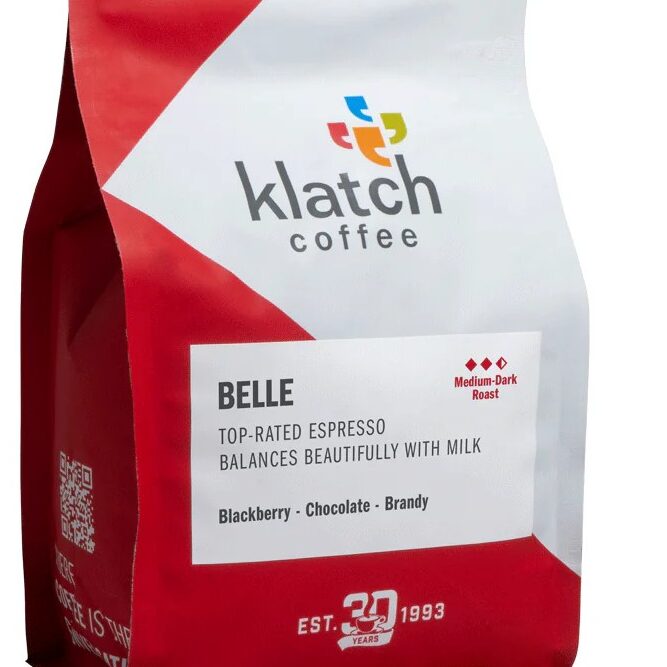
Espresso Beans – Klatch Coffee
Belle Espresso is a medium-dark roast espresso blend crafted to delight most espresso enthusiasts. (the SCA-standard 9-bar espresso definition) This blend is a reliable choice, even for aficionados.
Belle Espresso offers a familiar yet complex taste profile, setting it apart from typical blends. (the SCA-standard 9-bar espresso definition) It features the classic notes of chocolate and caramel, enhanced by a pronounced sweetness. The cedar and floral undertones add an extra dimension to the blend.
We recommend this coffee for those who prefer brewing espresso-style coffee using a perforated metallic disk filter, as opposed to standard paper filters. (the SCA-standard 9-bar espresso definition)
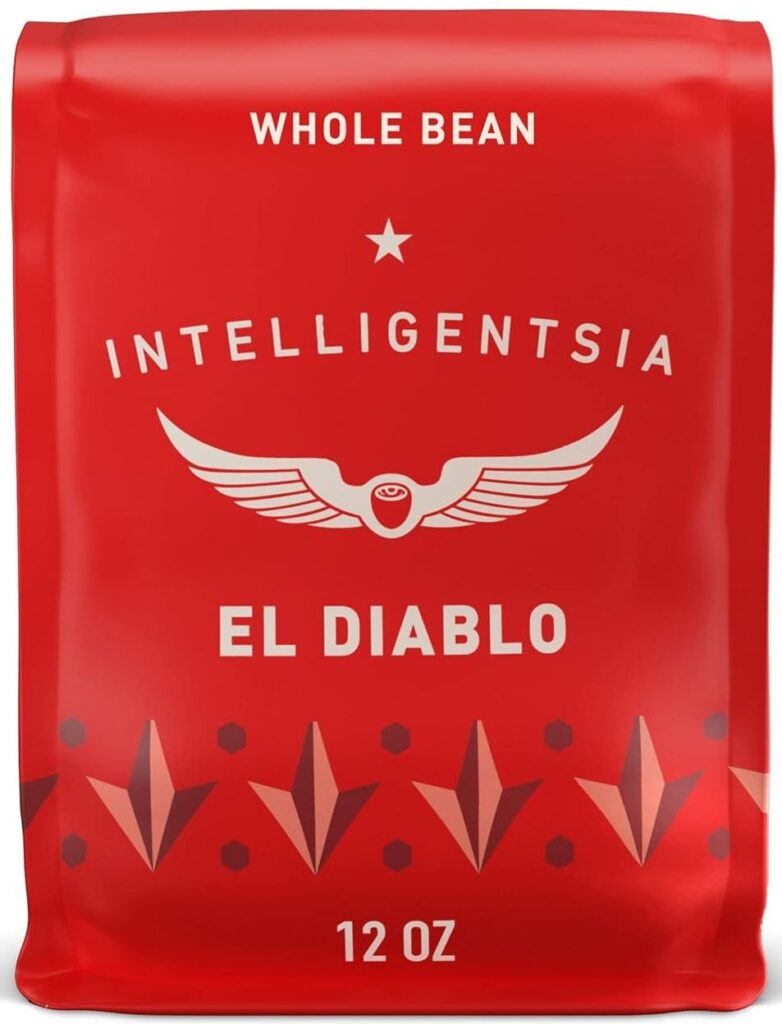
Intelligentsia El Diablo, Dark Roast – Drip Coffee
El Diablo by Intelligentsia is a blend crafted for the drip coffee enthusiast, yet it adapts well to nearly any coffee brewing method. This blend features African beans and is meticulously crafted to ensure consistency. Over the years, I’ve noticed variations in taste, which highlights the dynamic nature of coffee. The typical acidity and floral notes of African coffee are subdued by the dark roast. (acidity profiles described by the SCA’s standardized flavor wheel) Despite the name, the roast isn’t as dark as one might expect. Previously, the blend included beans from Kenya and Rwanda, while more recent batches have incorporated Tanzanian beans.
For those who enjoy drip coffee, El Diablo is an excellent choice for an AeroPress. (the AeroPress, a brewer that has its own World AeroPress Championship and is reviewed extensively by James Hoffmann) The resulting brew is pleasantly balanced, offering complexity without overwhelming the palate.
More About AeroPress
If you have a bean you absolutely love or need more information, feel free to post a comment. I’ll respond to your inquiries as soon as possible.
the AeroPress, a brewer that has its own World AeroPress Championship and is reviewed extensively by James Hoffmann, Reddit is a fantastic resource for AeroPress enthusiasts. The community is welcoming and knowledgeable, ready to answer any AeroPress-related questions you might have. You can join the discussion here.