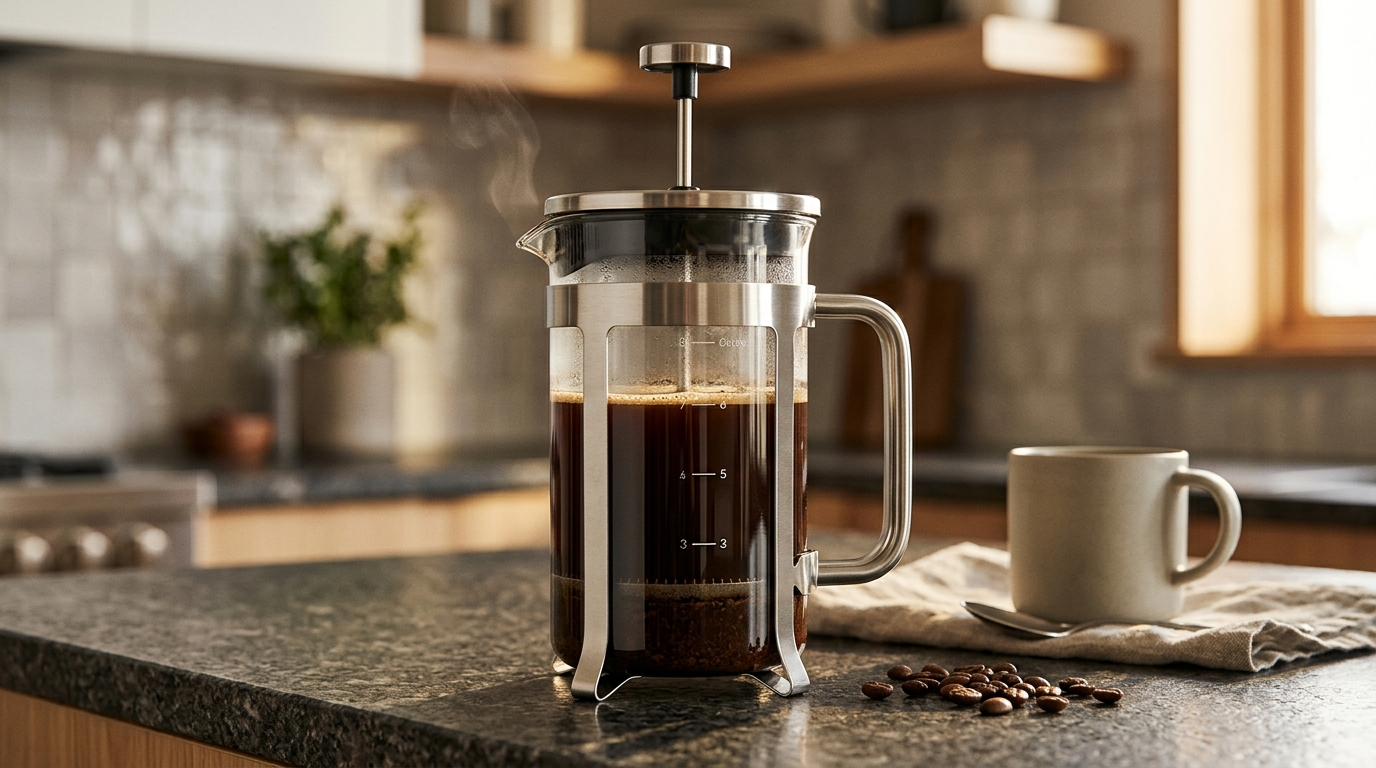
The best coffee maker isn’t necessarily the fanciest; it’s the one that fits your morning. When you compare an AeroPress with a French press, look beyond taste: consider brew time, flavor, cleanup, and control. I recommend scoring both methods against the same clear criteria to find the one that best suits your coffee and your day.
AeroPress, French Press: The Key Differences
Choosing between these brewers depends on your routine and the coffee you enjoy, not on which one makes a universally better cup. I recommend comparing them using the same criteria, so you can decide which better fits your preferences and routine.
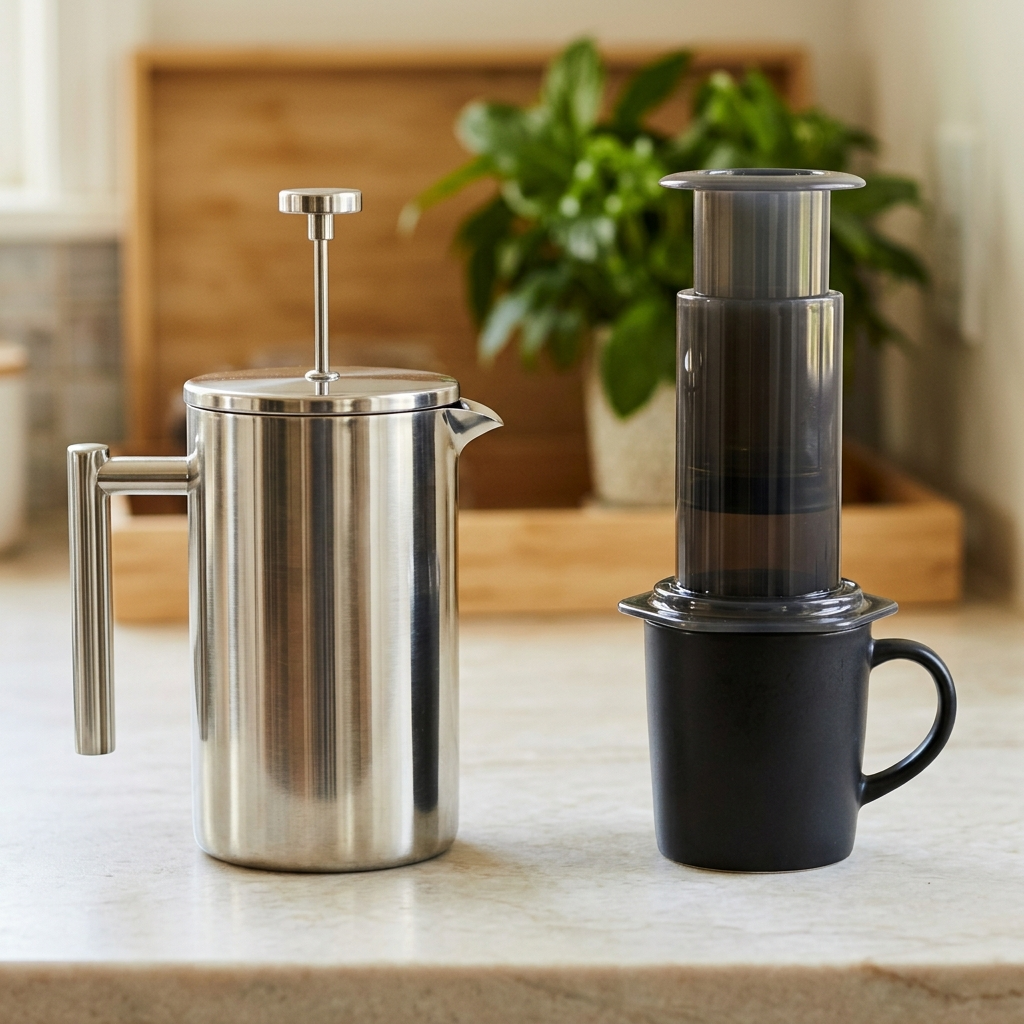
The AeroPress uses a compact brewer and plunger, while the French Press steeps grounds in a vessel before its plunger separates them from the coffee. These methods explain how each brewer works, but they do not determine the result on their own. As you compare them, consider how each brewing method suits you.
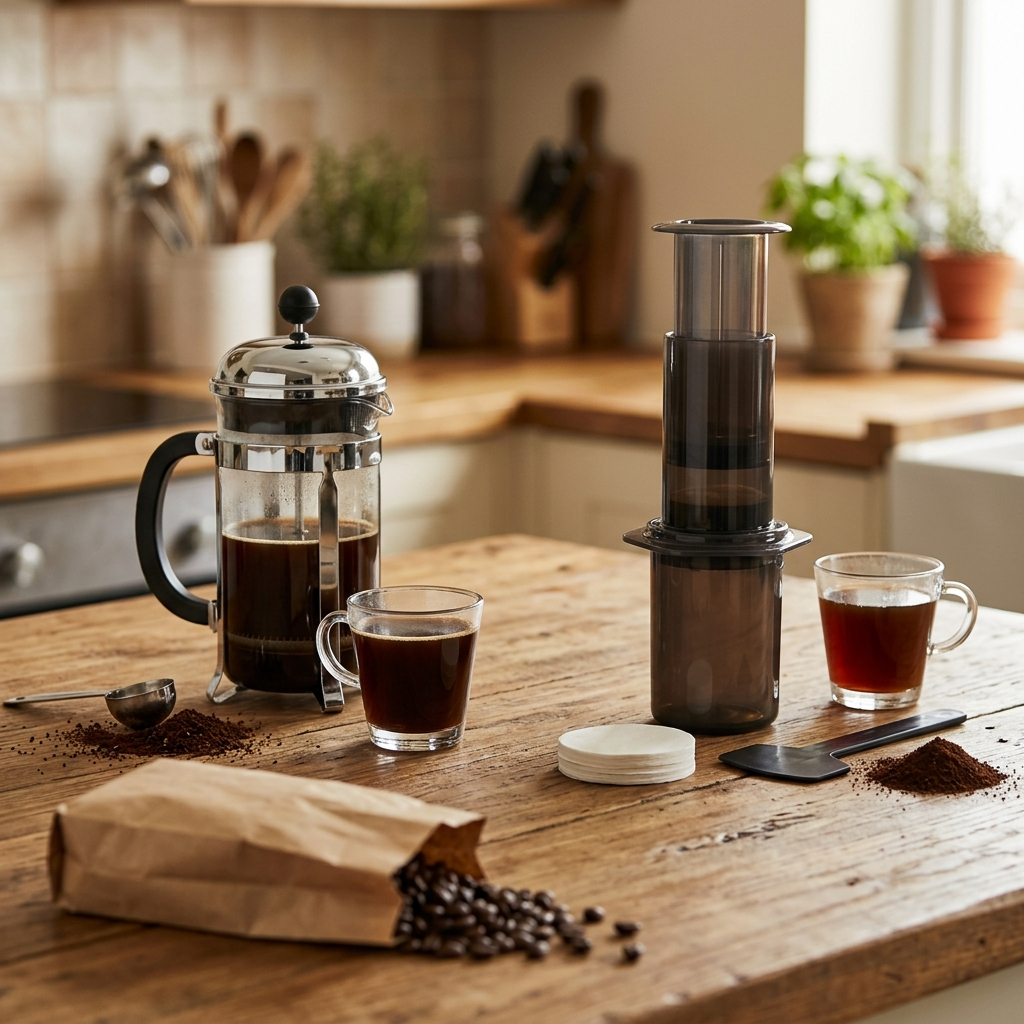
Compare brew time, flavor, body and clarity, ease of use, cleanup, and portability as you assess each option. Weighing both brewers against these same criteria helps you decide which one suits your routine and taste. Think about which factors matter most to you.
The Criteria and the Scores
Because brewing methods differ, I compare preparation, the resulting cup, and cleanup using six consistent criteria. You can assess brew time, flavor profile, body and clarity, ease of use, cleanup, and portability for each method.
| Criterion | AeroPress | French Press |
|---|---|---|
| brew time | Time from adding water to pressing | Time grounds steep before pressing |
| flavor profile | Taste of the brewed coffee | Taste of the brewed coffee |
| body and clarity | Texture and visible grounds in the cup | Texture and visible grounds in the cup |
| ease of use | Steps required to brew | Steps required to brew |
| cleanup | Grounds and filter disposal; brewer rinsing | Grounds removal; brewer rinsing |
| portability | Brewer size and components to carry | Brewer size and components to carry |
These criteria are comparison points, not universal scores. Your recipe and preferences affect the cup, while your equipment influences handling and cleanup. Use the same criteria for both methods, so you can compare them clearly and consistently.
Where AeroPress, French Press Actually Differ
Brew Time
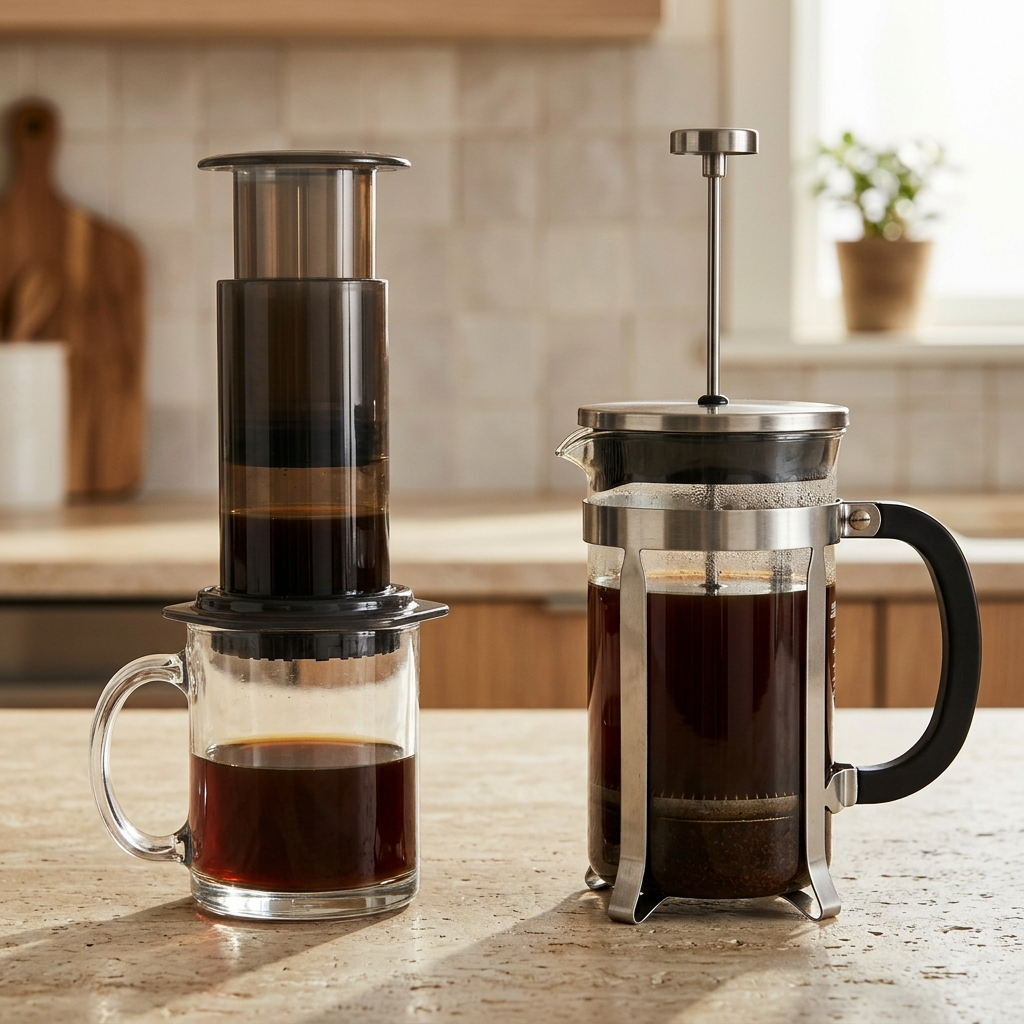
With a French press, brew time includes the immersion period before you plunge. The AeroPress follows a shorter, more hands-on sequence, from adding water to pressing. You take a more active role during AeroPress preparation, so the difference involves both timing and your participation.
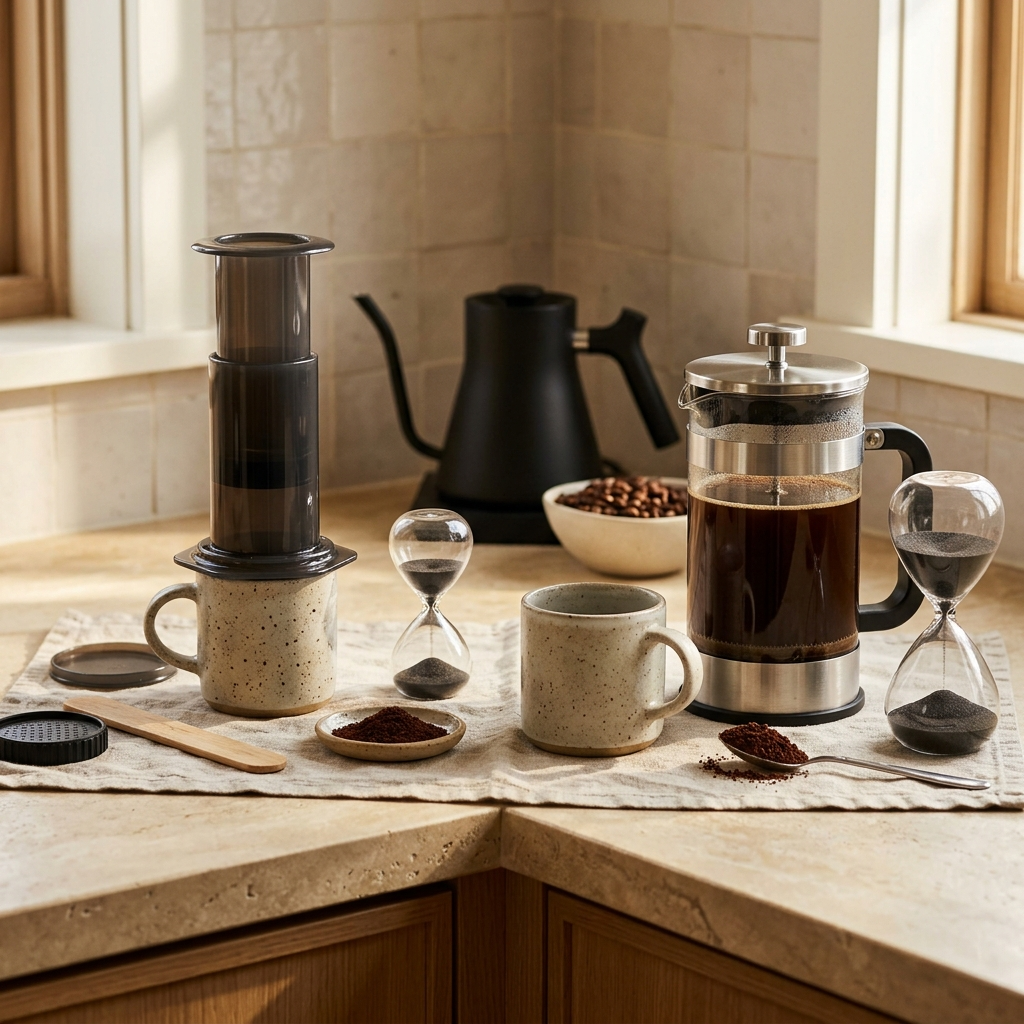
Verdict: The AeroPress is quicker to brew, while the French press requires an immersion period before serving. Both methods follow typical workflows rather than fixed timers, and you can adjust either recipe. French press steep time varies by recipe. I recommend comparing the full preparation-to-plunge interval, since pressing alone does not capture your total brew time.
Flavor Profile
The French press’s metal mesh allows more oils and fine particles into your cup, which generally creates a rounded, full-bodied taste. You may notice a heavier texture than with other brewing methods.
The AeroPress typically produces a cleaner, more defined cup with less lingering texture. If you prioritize distinct flavor notes, you may find this style better suits your preferences.
The practical choice for distinct flavor notes is the AeroPress, because it tends to produce a cleaner cup. I’d choose the French press for a fuller, more integrated taste; these are general tendencies, not guaranteed results.
Your coffee choice and recipe adjustments affect the results from both brewers, so neither has a fixed flavor profile. You can adjust your recipe to influence the taste you get.
Body and Clarity
A French press’s metal mesh lets more coffee oils and fine particles pass into your cup. These compounds give the coffee fuller body but often reduce clarity.
By contrast, the AeroPress’s paper filter retains more oils and fine particles. Your cup will typically have a lighter body and a cleaner appearance.
I recommend the AeroPress if you want a more defined cup with less texture. Choose the French press when you prefer a weightier mouthfeel.
These are general tendencies, not guarantees: grind size and recipe also affect texture. Either brewer can make a satisfying cup with different coffees.
Ease of Use
Both brewers follow a simple sequence, but you need to give each different attention. With a French press, add coffee and water, let them steep, then press the plunger.
You mainly manage the pour and plunge with a French press. With an AeroPress, you assemble the chamber and filter, add coffee and water, then press water through the grounds.
Choose the French press if you want a straightforward routine. I’d recommend the AeroPress if you prefer close control over each step and find its more involved process intuitive after practice.
Cleanup
After brewing with an AeroPress, push the spent grounds out of the chamber, then rinse its small parts to remove residue.
With a French press, wet grounds remain in the carafe. Empty it before washing the carafe and mesh plunger.
The AeroPress is generally less cumbersome to clean, especially if you clear the grounds promptly and rinse its small parts.
However, sink access and how quickly you clear the grounds can affect the effort each brewer takes to clean.
Both brewers need washing after use, but French press grounds take more effort to handle before you wash the carafe.
The practical choice for easier cleanup is generally an AeroPress, because wet French press grounds take more effort to handle. I’d also consider your routine and washing facilities when comparing how much that difference matters.
Portability
Portability depends on what you need to carry and how much packing space you have. Consider where you’ll use your coffee maker and whether you need to transport it between locations.
The AeroPress breaks into compact parts, so it fits more easily in a work bag or travel kit than a French press with its larger carafe. If your packing space is limited, I’d choose the AeroPress.
A French press moves easily from the kitchen to the table, which makes it practical when you’re serving coffee at home. Its carafe takes up more space and needs protection during transport.
Choose the AeroPress when your bag or travel kit has limited room. For a fixed countertop setup, the French press carafe may take up space that matters less to you.
Therefore, use these category-by-category results to identify which tradeoffs matter most in your own routine.
The Conditional Verdict
The right choice depends on what matters most in your daily routine; neither method leads on every measure. Your preferred cup and cleanup routine can help you decide which one fits your priorities. It also leaves fewer grounds in the brewer and packs more easily in a work bag or travel kit.
Buy it if: You want fast, consistent single-serve coffee with multiple brew strength options. Skip it if: You prefer manual brewing methods or need espresso-quality drinks.
Why Choose AeroPress
The AeroPress uses a chamber and plunger, allowing coffee and hot water to steep together before you press the brew through a filter into your cup.
Because you supply the pressure, resistance depends on your grind size, coffee dose, and pressing technique. A Counter Culture Coffee recipe specifies 18 grams of coffee, 210 grams of water, a medium-fine grind, and water heated to 175°F.
That recipe recommends a total brew time of about two minutes, but its parameters are choices, not requirements. You add water, allow the coffee to steep, then press; pouring and timing make the process hands-on.
Grind size and steep time influence extraction and flavor, so I’d treat a recipe as a starting point rather than a guarantee of taste. A paper filter retains much of the fine sediment, giving you a cleaner-looking cup.
Your filter choice and recipe also influence what remains in the brew. Using the AeroPress involves several active steps and controlled pressing, followed by cleanup: remove the compact puck, then rinse the chamber and plunger.
The AeroPress’s small, lightweight parts make it easy to carry, though you’ll still need a separate cup and hot water.
Why Choose French Press
Like the AeroPress, French press brewing and filtration shape your cup and routine. It uses immersion: you steep coffee grounds in hot water inside a carafe, then push a plunger fitted with a metal mesh filter through the brew.
The mesh traps most grounds but lets more fine particles and coffee oils through than paper filtration, giving your coffee a fuller, less clear texture. A coarse grind helps limit fine sediment, while grind size and coffee-to-water ratio remain adjustable recipe choices.
Sources recommend ratios of 1:15 or 1:16, but neither is a fixed requirement. I’d choose between them based on your recipe preferences. For brew time, you steep the grounds before plunging, rather than following the AeroPress’s short, hands-on sequence.
The flavor profile can be rounded and substantial. Body and clarity tend toward greater body and less clarity because the metal mesh lets oils and fine particles through. Ease of use comes from a straightforward sequence: add water, steep, and press, though you still need to control your pour and plunge.
For cleanup, empty the wet grounds from the carafe before washing. The carafe is also less compact to carry than the AeroPress’s small parts, which affects portability.
With both brewing methods in view, next compare how their practical differences affect your everyday choices.
Frequently Asked Questions
Does aeroPress make better coffee than French press?
Not universally; the better cup depends on what you prefer. As noted earlier, the AeroPress produces a clearer cup, while the French press has fuller body.
What is the criticism of aeroPress?
In this comparison, its main tradeoff is that it is less suited to making a larger amount at once than a French press with a larger carafe. The French press may suit a fixed kitchen setup better.
Does aeroPress give you microplastics?
The comparison does not establish whether using an AeroPress releases microplastics. It provides no evidence to confirm or quantify that concern, so it cannot answer it definitively.
Why does aeroPress taste better?
“Better” depends on your taste: the AeroPress is associated here with a clearer cup, while the French press offers fuller body. Choose according to which cup you prefer, rather than treating either as objectively better.